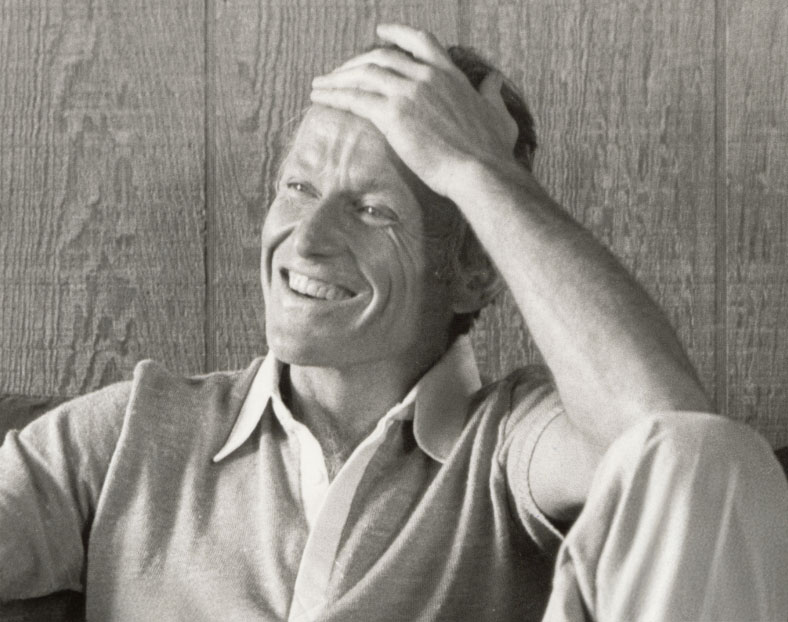
“The three elements — the three jewels — of Gestalt practice are awareness, choice, and trust. Trust in your power of self-regulation given the exercise of your ability to contact experience and to choose. Gestalt, more than being a therapy or perhaps even a practice, is simply an alternative way for people to be present with one another.
“To be open to what is, rather than defining what has to be, is very important to the practice—important for the person initiating to have that attitude, and also for the person who is in the reflector relationship. It allows space for experience as it is, without the need to categorize or control it.
“Gestalt is a way of being present — with yourself, another person, or a group. It is likely to be more nourishing than the ways people typically interact, as it invites presence and availability for another’s experience, just as it is.”
As an explorer of spiritual and embodiment practices, Dick was dedicated to shaping Esalen Institute into a sanctuary for healing, growth, and exploration. His influence and curiosity fused Eastern wisdom, Western psychology, and lived experience within the Esalen community and beyond.
“My function [as reflector] is simply to be available in a particular way — to reflect and clarify whatever comes up in that person’s process. I am never defining how a person should be. The person remains responsible for their own experience. This is very unlike standard psychiatry, where you’re put, if not in jail cells, certainly in diagnostic pigeonholes.
The Price House was first referred to as the Little House. Dick and Chris moved in just before their daughter, Jenny, was born in 1974. The three lived in the Little House, which was “Gestalt Central,’ until Dick’s passing in 1985. David, Dick’s son, lived there intermittently, and later served as Esalen’s general manager from 1995–2003. Chris and Jenny left the Little House in 1988, and Chris continued to teach there, passing on the gestalt tradition to her daughter, Rudi. David continued to work at Esalen until he moved his family to Poland in 2006.
Esalen Institute
55000 Highway 1
Big Sur, CA 93920

US: 1-831-667-3000

info@esalen.org