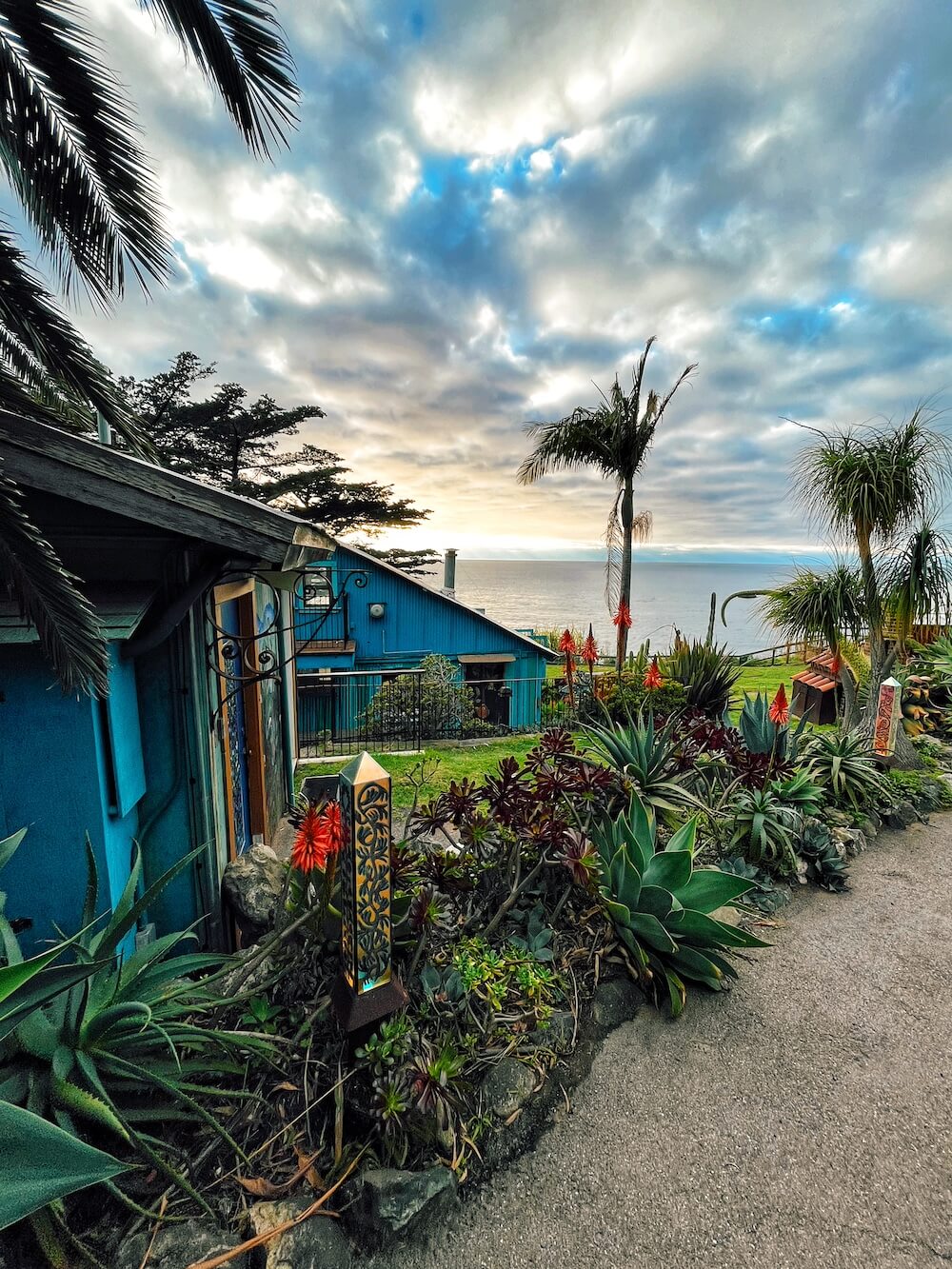
This turquoise wood-and-corrugated‑metal structure known as the Art Barn is alive with mosaic, stained glass, clay, paint, and the reverberations of community expression.
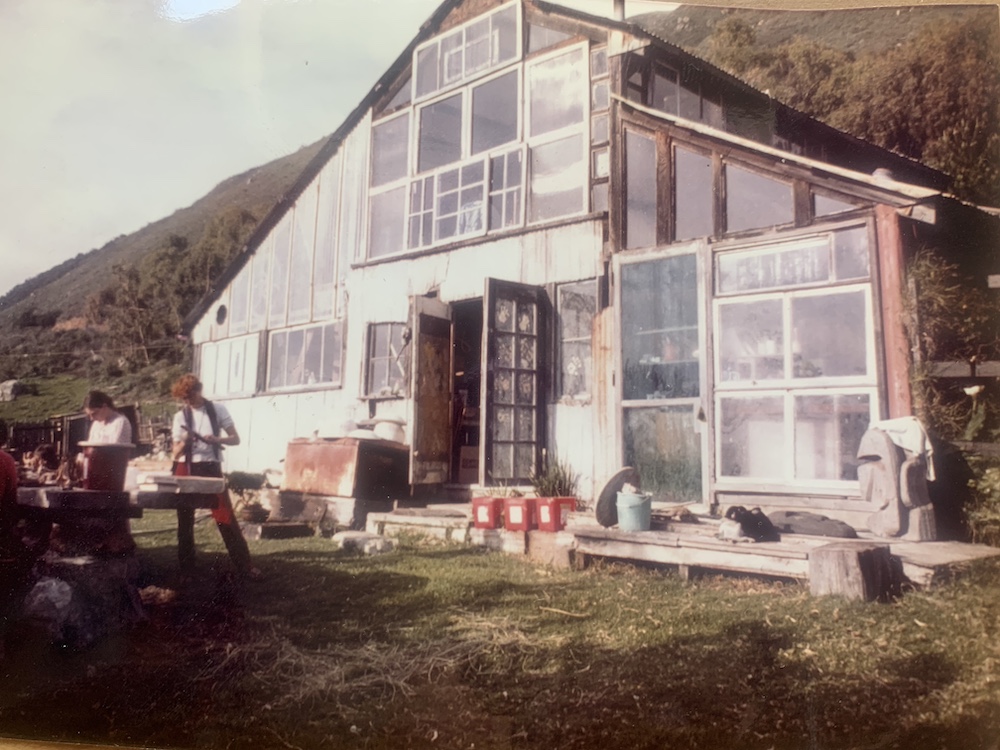
Back when Michael and Dennis Murphy were children visiting with their parents from their home in Salinas, this modest structure sat on the lawn between the Murphy and Price houses. It was originally a utilitarian workshop, home to a team of Norwegian craftsmen. Once their work was done, the barn was carefully relocated to its current spot, where it would begin its evolution into a sanctuary of creative life.
By 1965, the Art Barn was transforming into a communal studio, housing eleven artists across four apartments. Among its first residents were potter Dick Horan, who dug his own clay at Pfeiffer Ridge, and sculptor and batik artist John Horler, whose iconic Red Lady installation still stands in the Garden. (John’s vibrant batik banners became the backdrop for Joan Baez and Nancy Jane Carlen’s Big Sur Folk Festivals from 1964 to 1971, and a pack of tarot cards he designed can currently be found at the bar in the Lodge.) Other notable inhabitants included Jackie, a cartoonist; Jim Sellers, a leatherworker; Tony, a flute maker; and Horst Mayer, a photographer who used the bathroom as his darkroom.
This coterie of artists made the Art Barn an open laboratory of creativity, where passersby and guests could drift in to take a peek at the works in progress and perhaps join spontaneous collaborations. (Long before there was a back gate!)
As years passed, the Art Barn became a vibrant creative space. Guests and students found sketchbooks, paintbrushes, and clay with space to “just make.” For over a decade, gravelly‑voiced art steward Bill Herr presided, hosting unpretentious creativity and awarding the coveted Red Lady prize — a handcrafted mini‑sculpture — in recognition of Esalen’s cultural contributions.
Beginning in 2002, under the leadership of interdisciplinary artist, musician, and educator Jayson Fann, the Art Barn entered a new era and was formally renamed the Esalen Arts Center. It became the cornerstone of Esalen’s visual and cultural arts programming. Jayson ignited what emerged as a renaissance that united art, ecology, spirituality, and world culture into an living expression of transformation and connection.
As founder and producer of the Esalen International Arts Festivals from 2004‑2011, Jayson ushered a culturally diverse era into Esalen’s history, bringing together artists and traditions from around the world. His own architectural sculptures, known as Spirit Nests, along with musical workshops, and multicultural art gatherings emphasized communal creativity, sustainability, and cross‑cultural dialogue. Known for his hands-on approach and boundless curiosity, Jayson fostered a sense of playful experimentation, encouraging artists and participants alike to explore the intersections of visual, sonic, and ritual practices. Through his leadership, the Art Barn evolved beyond a gallery or studio into a laboratory where collaboration, innovation, and spiritual inquiry converged.
The Art Barn has always been interwoven with Esalen’s larger human potential movement ethos. It has hosted residencies, arts festivals, and creative explorations where visual creation became a form of therapeutic practice. By the 1990s, Esalen’s artist‑in‑residence program expanded its scope to include poets, musicians, photographers, and performers, solidifying the Art Barn’s role within Esalen’s cultural ecosystem.
From 2012-2014 under the guidance of Dulce Murphy and Carol Miskel, Esalen’s Track Two: An Institute for Citizen Diplomacy launched an art exchange that united leading young artists from Vladivostok, Russia and promising young artists from San Francisco. Guided by Track Two’s bridge-building ethos, these artists — divided by language, culture, and politics — came together in the Art Barn to create side by side. What began as an experiment in cross-cultural dialogue soon deepened into something more profound: a living example of Esalen’s alchemy, where art dissolves boundaries, relationships form in the in-between spaces, and creativity becomes its own form of diplomacy.
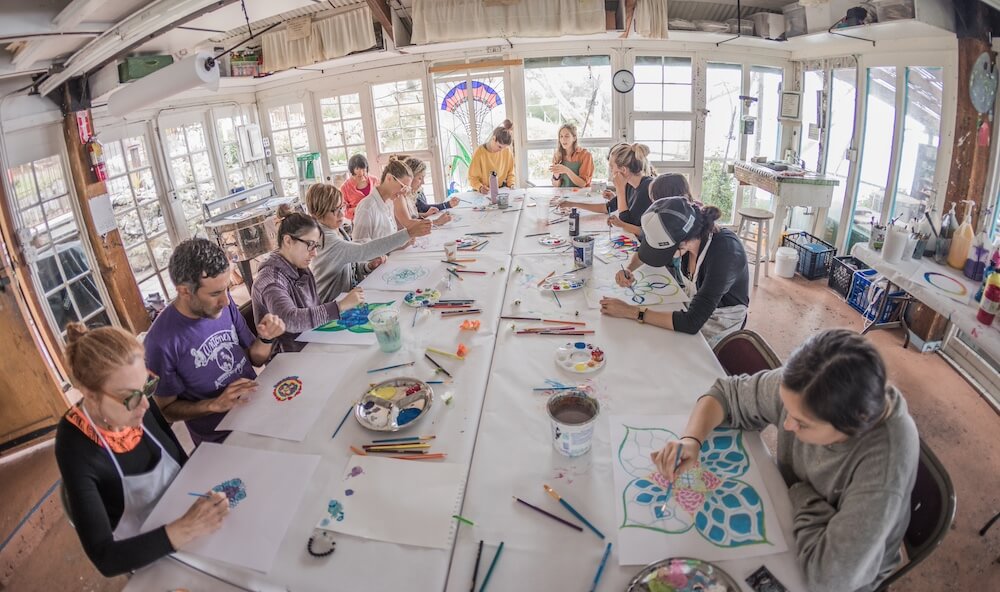
Today, the Art Barn pulses with ever-evolving energy, hosting workshops that offer a multimedia mélange of collage, sketch, paint, and clay. Both inside and outside, the space is intentionally open, a studio where meditative painting, solo pottery sessions, and cross-generational art‑making continue to flourish. Here, the lineage of experimentation and community that defines Esalen’s artistic life, finds fresh expression each day, and is led by those who come to create, to listen, and to be transformed.
Esalen Institute
55000 Highway 1
Big Sur, CA 93920

US: 1-831-667-3000

info@esalen.org