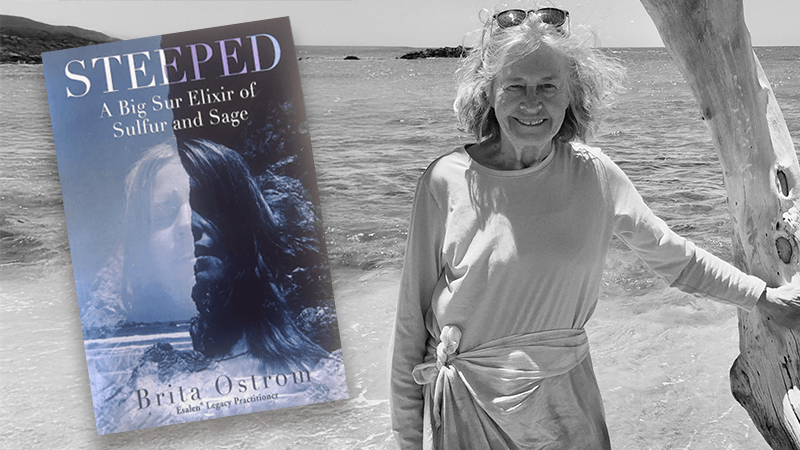
Grief is such a universal emotion. It is something we will all experience. It arrives through death. It also presents through endings, ruptures, disillusionment, illness, estrangement, collective trauma, and the quieter losses that don’t always have names. Lately, for many of us, grief may be feeling even heavier. There’s a spiritual weight to it, a cumulative ache shaped by personal loss and the broader conditions of the world we’re living in. Rather than something to fix or rush through, grief asks to be felt. To be witnessed. To move through us in its own time.
When things get rough, creating small, intentional spaces — at home, in the body, and through ritual — helps place grief where it is allowed to exist without needing to be solved. Where it can soften, loosen, and eventually pass through rather than harden inside us.
Below are a few books, rituals, and sensory supports that have helped us make life just a little more bearable during challenging times. They are offerings, not prescriptions, gentle companions for when the heart feels tender and the ground beneath us less steady.

by Darnell Lamont Walker
“Never Can Say Goodbye is deliciously woven from threads of guidance, memory, and devotion to the sacred labor of holding space at the end of life.” — Alua Arthur, Briefly Perfectly Human
In his debut book, death doula Darnell Lamont Walker explores the silence surrounding death — particularly within the Black community — where conversations about dying and grief are often shaped by generations of trauma, systemic racism, unequal access to healthcare, and deeply ingrained cultural taboos.
Walker shares intimate stories from his work holding space at the end of life, guiding individuals as they seek closure, meaning, and the chance to tell their stories on their own terms. Through these narratives, he reveals the healing that becomes possible when someone is truly witnessed — when grief is honored rather than hidden.
This book is for anyone navigating loss, carrying unspoken grief, or curious about the role of a death doula. It reminds us that storytelling itself can be a profound act of healing, and that facing mortality with honesty can bring unexpected peace.
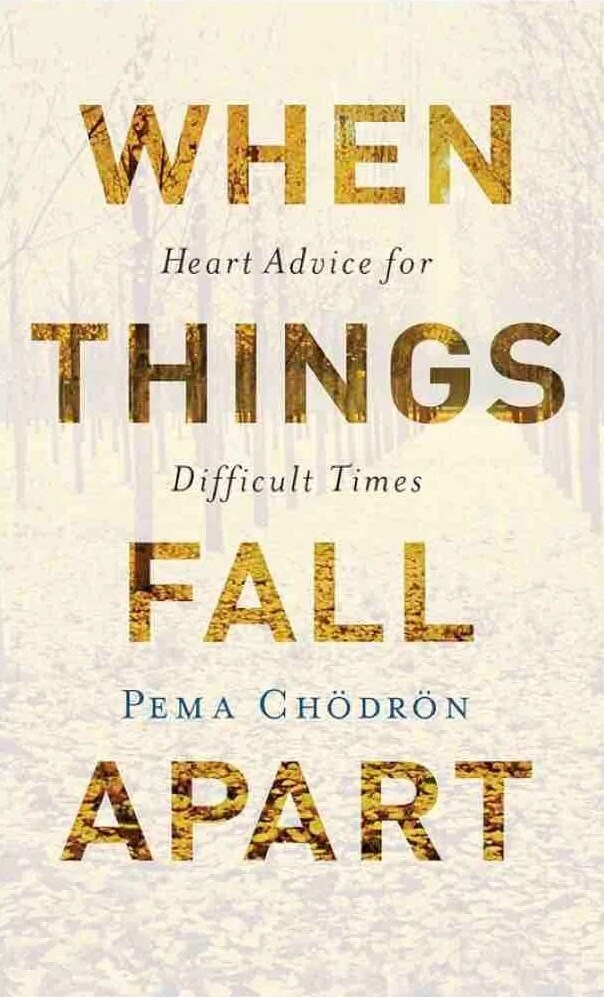
by Pema Chödrön
A perennial classic, this book cuts straight to the heart of spiritual practice in times of pain. Pema Chödrön gently challenges the instinct to turn away from suffering, suggesting instead that we move toward it with curiosity, tenderness, and courage.
Drawing on Buddhist wisdom, she offers practical tools for sitting with fear, anxiety, and heartbreak, showing how becoming intimate with discomfort can open the heart in ways we never imagined. This is a book many people return to again and again, each time finding new layers of insight as life unfolds.
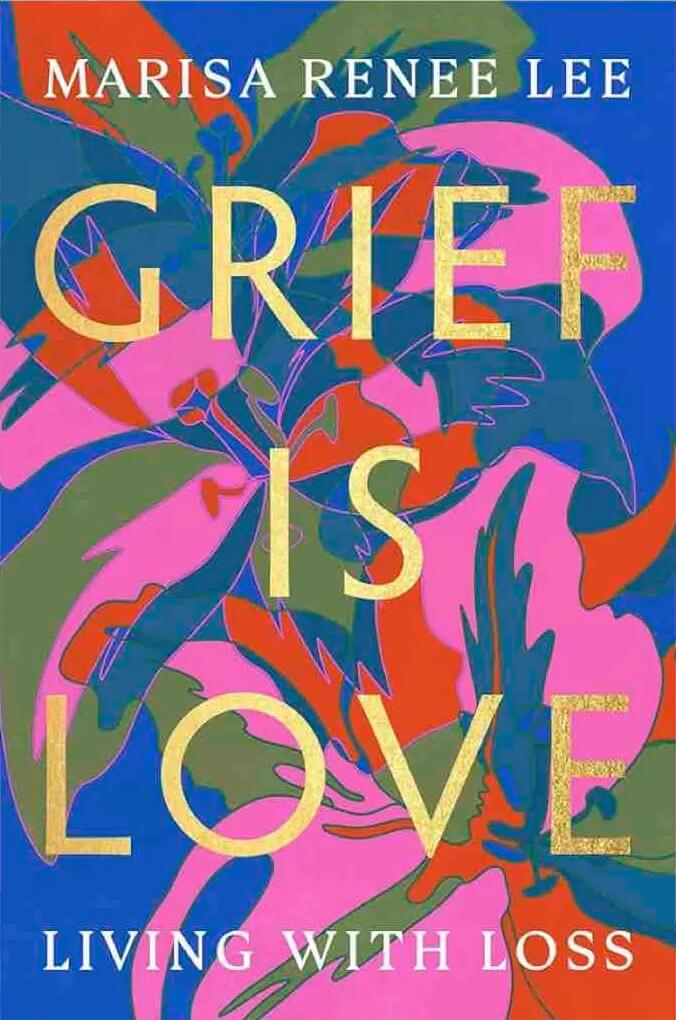
by Marisa Renee Lee
Marisa Renee Lee reframes grief not as something to “get over,” but as love that continues after loss. Through her own experiences — losing her mother, a pregnancy, and a cousin — she offers a compassionate guide to living alongside grief rather than trying to outrun it.
The book challenges rigid timelines and stage-based models of grief, making space for joy, rage, numbness, remembrance, and rest to coexist. Lee also speaks directly to the particular ways grief is experienced in marginalized communities, offering language rooted in self-compassion, permission, and grace.
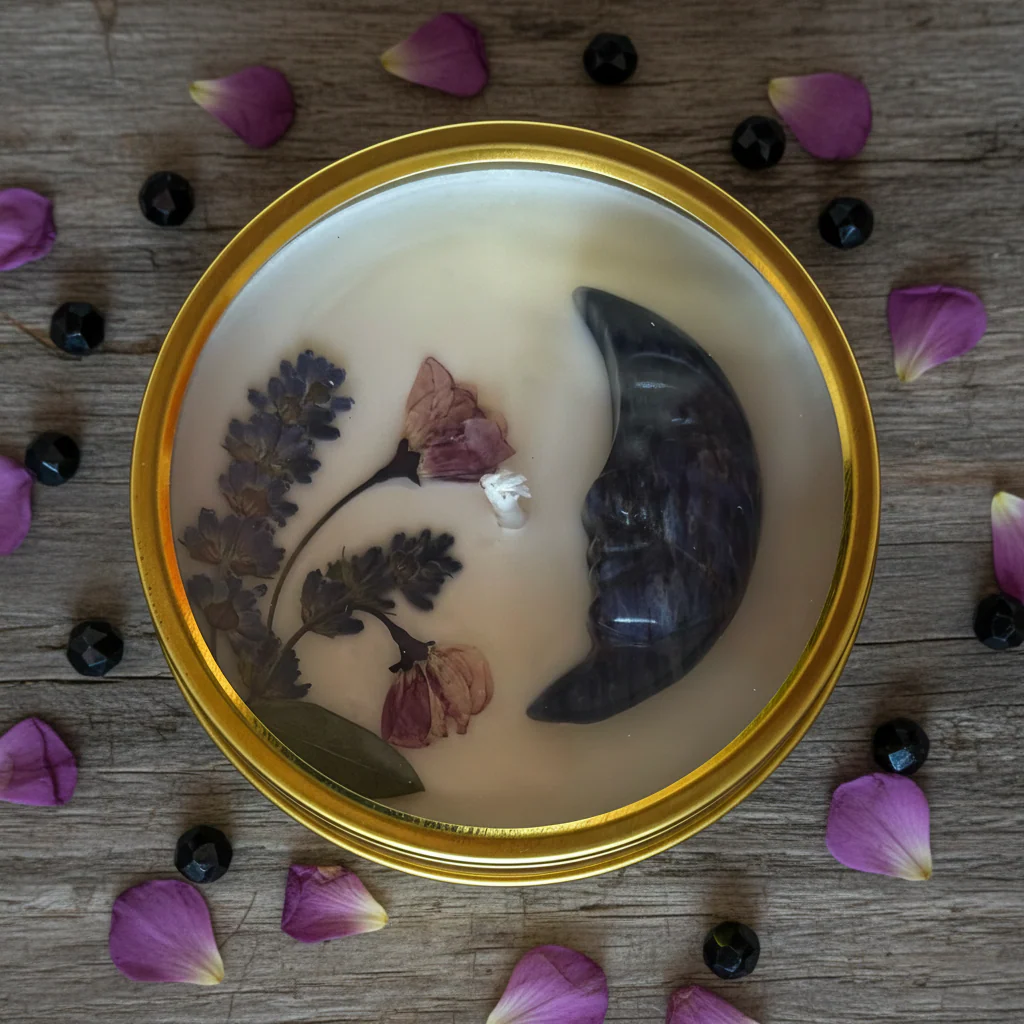
by Goddess Moon Goods
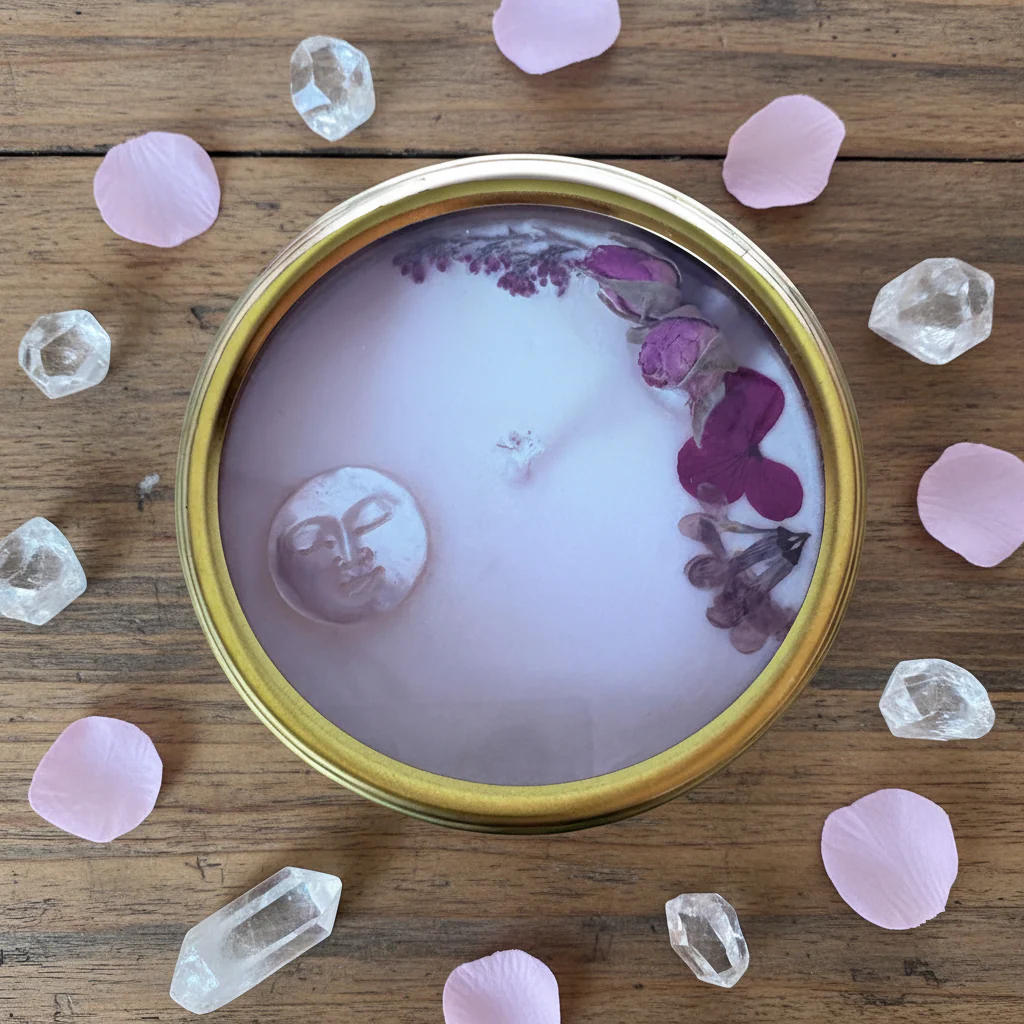
Infused with calming lavender and topped with a carved blue sodalite moon, pressed organic lavender, and seasonal blossoms, this candle invites quiet beginnings. Each comes with a written new moon ritual inside the box, offering a complete ceremonial experience — perfect for setting intentions, honoring loss, or simply sitting in stillness.
by Goddess Moon Goods
With notes of rose petals and tulsi herbs, this candle transforms any space into something sacred. As it burns, the hand-carved mother-of-pearl moon sinks into the wax, creating the illusion of a glowing full moon behind clouds. Flowers float, the room fills with rose, and a ritual prompt written by Caroline invites reflection and release.
by Lisa Hudson
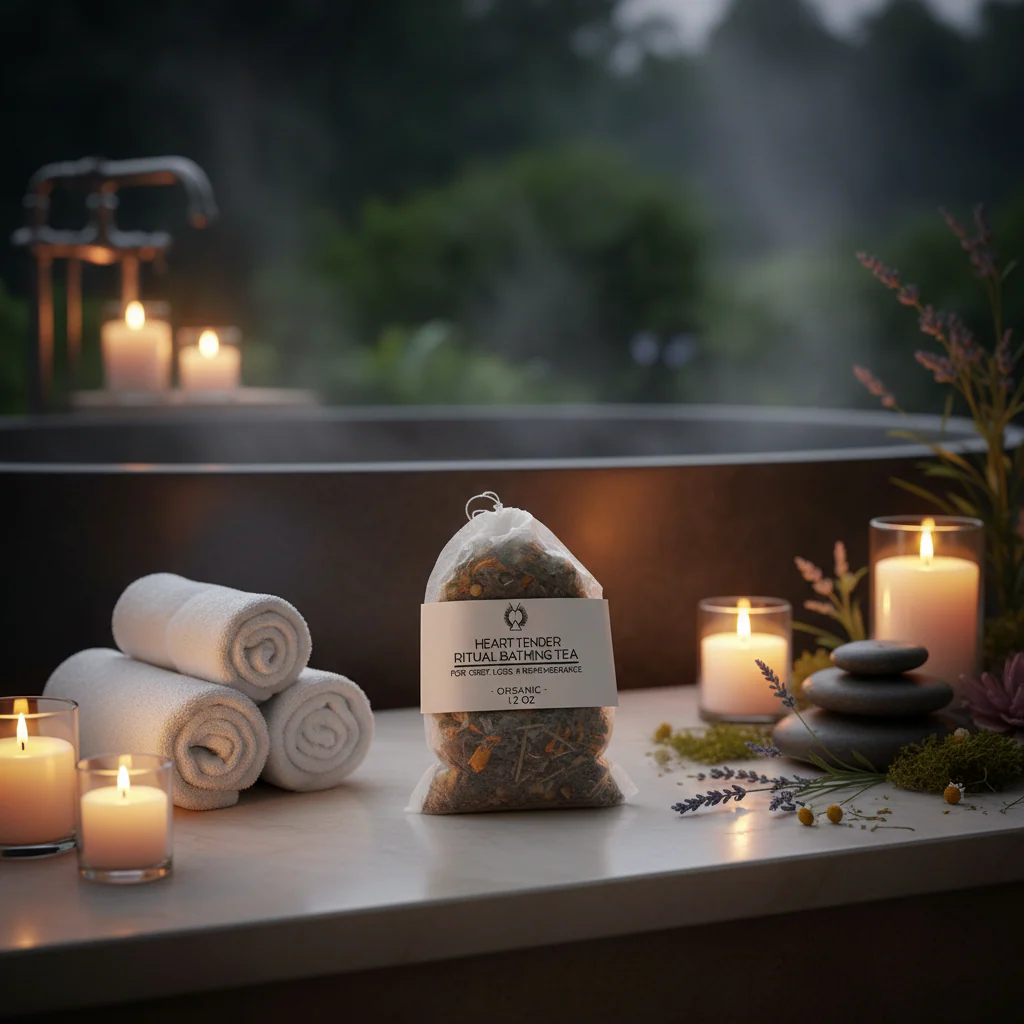
These herbal bathing teas are rooted in ancient traditions across many cultures. Made with 100% organic flowers, mineral-rich salts, healing herbs, and soothing colloidal oats, they invite you to slow down and return to your own inner waters. Each sachet can also be used as a warm compress, extending the ritual beyond the bath. The blends are designed to soften, release, and restore balance — gentle allies for when grief lives not just in the heart, but in the body.
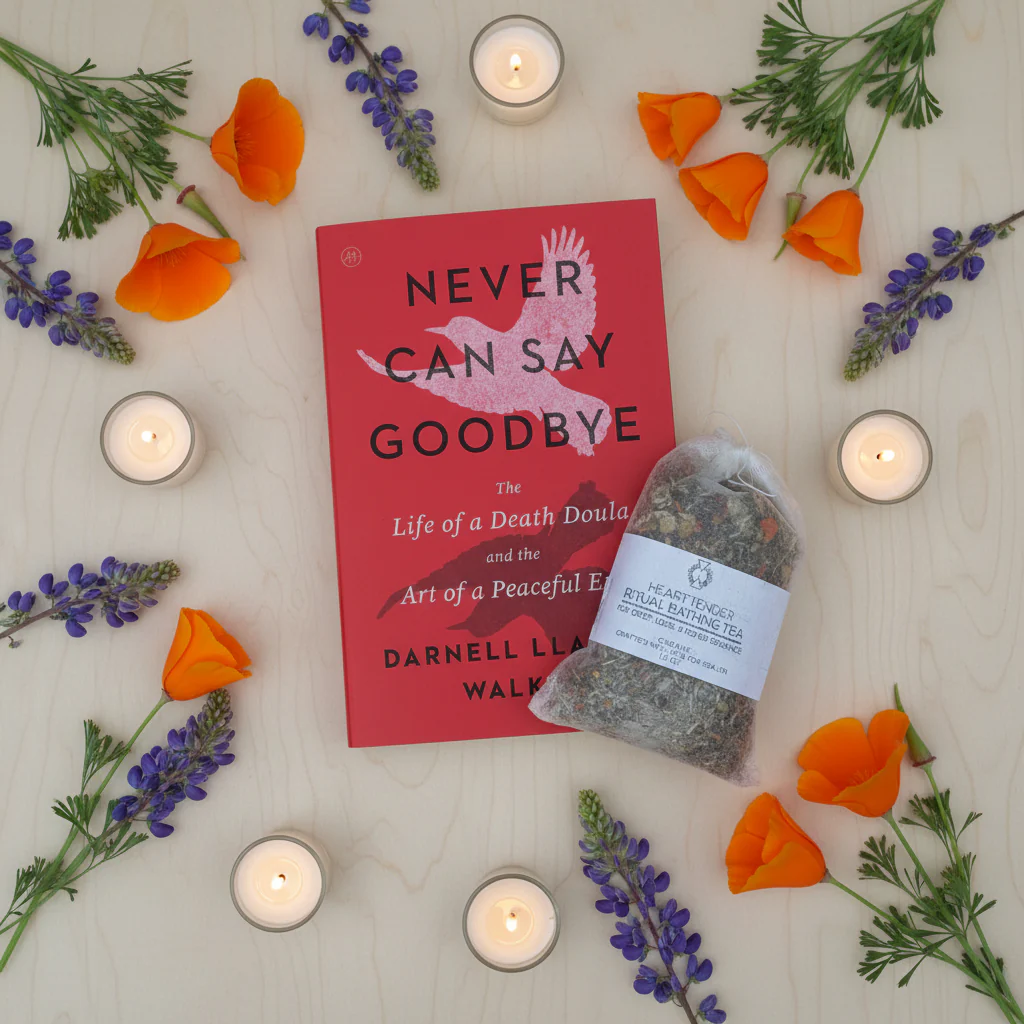
We paired the Heart Tender Bathing Tea with Never Can Say Goodbye because together they offer quiet, meaningful support during times of grief and transition. The bath invites you to slow down, soften, and allow emotions to rise in private, restorative space. The book, written from the perspective of a death doula, gently reminds us to cherish the people we love and approach loss with presence and grace. Together, this bundle feels like gentle hands holding space for the heart — one through ritual, the other through story.
When we give grief spaciousness, be it through books, ritual, scent, water, and quiet attention, we are not being indulgent. We are actually practicing an act of respect for what we’ve lost, for what we’ve loved, for what still longs to be felt.
We don’t need to rush grief away. Sometimes the most healing thing we can do is set the stage, light a candle, and let it move through us — one breath at a time.

“Remembering to be as self compassionate as I can and praying to the divine that we're all a part of.”
–Aaron
“Prayer, reading, meditation, walking.”
–Karen
“Erratically — which is an ongoing stream of practice to find peace.”
–Charles
“Try on a daily basis to be kind to myself and to realize that making mistakes is a part of the human condition. Learning from our mistakes is a journey. But it starts with compassion and caring. First for oneself.”
–Steve
“Physically: aerobic exercise, volleyball, ice hockey, cycling, sailing. Emotionally: unfortunately I have to work to ‘not care’ about people or situations which may end painfully. Along the lines of ‘attachment is the source of suffering’, so best to avoid it or limit its scope. Sad though because it could also be the source of great joy. Is it worth the risk?“
–Rainer


“It's time for my heart to be nurtured on one level yet contained on another. To go easy on me and to allow my feelings to be validated, not judged harshly. On the other hand, to let the heart rule with equanimity and not lead the mind and body around like a master.”
–Suzanne
“I spend time thinking of everything I am grateful for, and I try to develop my ability to express compassion for myself and others without reservation. I take time to do the things I need to do to keep myself healthy and happy. This includes taking experiential workshops, fostering relationships, and participating within groups which have a similar interest to become a more compassionate and fulfilled being.“
–Peter


“Self-forgiveness for my own judgments. And oh yeah, coming to Esalen.”
–David B.
“Hmm, this is a tough one! I guess I take care of my heart through fostering relationships with people I feel connected to. Spending quality time with them (whether we're on the phone, through messages/letters, on Zoom, or in-person). Being there for them, listening to them, sharing what's going on with me, my struggles and my successes... like we do in the Esalen weekly Friends of Esalen Zoom sessions!”
–Lori

“I remind myself in many ways of the fact that " Love is all there is!" LOVE is the prize and this one precious life is the stage we get to learn our lessons. I get out into nature, hike, camp, river kayak, fly fish, garden, I create, I dance (not enough!), and I remain grateful for each day, each breath, each moment. Being in the moment, awake, and remembering the gift of life and my feeling of gratitude for all of creation.”
–Steven
“My physical heart by limiting stress and eating a heart-healthy diet. My emotional heart by staying in love with the world and by knowing that all disappointment and loss will pass.“
–David Z.
Today, September 29, is World Heart Day. Strike up a conversation with your own heart and as you feel comfortable, encourage others to do the same. As part of our own transformations and self-care, we sometimes ask for others to illuminate and enliven our hearts or speak our love language.
What if we could do this for ourselves too, even if just for today… or to start a heart practice, forever?
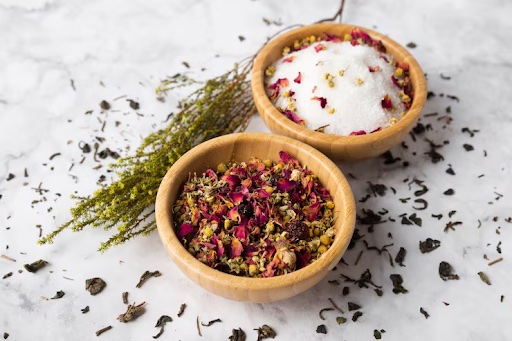
You can also create your own ritual bath using herbs traditionally associated with grief support and emotional healing:
Directions: Combine the herbs with the salts in warm bathwater and soak with intention. These herbs can also be brewed as a tea to support you internally, which is another way of letting care move gently through the body.
Grief is such a universal emotion. It is something we will all experience. It arrives through death. It also presents through endings, ruptures, disillusionment, illness, estrangement, collective trauma, and the quieter losses that don’t always have names. Lately, for many of us, grief may be feeling even heavier. There’s a spiritual weight to it, a cumulative ache shaped by personal loss and the broader conditions of the world we’re living in. Rather than something to fix or rush through, grief asks to be felt. To be witnessed. To move through us in its own time.
When things get rough, creating small, intentional spaces — at home, in the body, and through ritual — helps place grief where it is allowed to exist without needing to be solved. Where it can soften, loosen, and eventually pass through rather than harden inside us.
Below are a few books, rituals, and sensory supports that have helped us make life just a little more bearable during challenging times. They are offerings, not prescriptions, gentle companions for when the heart feels tender and the ground beneath us less steady.
“Never Can Say Goodbye is deliciously woven from threads of guidance, memory, and devotion to the sacred labor of holding space at the end of life.” — Alua Arthur, Briefly Perfectly Human
In his debut book, death doula Darnell Lamont Walker explores the silence surrounding death — particularly within the Black community — where conversations about dying and grief are often shaped by generations of trauma, systemic racism, unequal access to healthcare, and deeply ingrained cultural taboos.
Walker shares intimate stories from his work holding space at the end of life, guiding individuals as they seek closure, meaning, and the chance to tell their stories on their own terms. Through these narratives, he reveals the healing that becomes possible when someone is truly witnessed — when grief is honored rather than hidden.
This book is for anyone navigating loss, carrying unspoken grief, or curious about the role of a death doula. It reminds us that storytelling itself can be a profound act of healing, and that facing mortality with honesty can bring unexpected peace.
A perennial classic, this book cuts straight to the heart of spiritual practice in times of pain. Pema Chödrön gently challenges the instinct to turn away from suffering, suggesting instead that we move toward it with curiosity, tenderness, and courage.
Drawing on Buddhist wisdom, she offers practical tools for sitting with fear, anxiety, and heartbreak, showing how becoming intimate with discomfort can open the heart in ways we never imagined. This is a book many people return to again and again, each time finding new layers of insight as life unfolds.
Marisa Renee Lee reframes grief not as something to “get over,” but as love that continues after loss. Through her own experiences — losing her mother, a pregnancy, and a cousin — she offers a compassionate guide to living alongside grief rather than trying to outrun it.
The book challenges rigid timelines and stage-based models of grief, making space for joy, rage, numbness, remembrance, and rest to coexist. Lee also speaks directly to the particular ways grief is experienced in marginalized communities, offering language rooted in self-compassion, permission, and grace.
Infused with calming lavender and topped with a carved blue sodalite moon, pressed organic lavender, and seasonal blossoms, this candle invites quiet beginnings. Each comes with a written new moon ritual inside the box, offering a complete ceremonial experience — perfect for setting intentions, honoring loss, or simply sitting in stillness.
With notes of rose petals and tulsi herbs, this candle transforms any space into something sacred. As it burns, the hand-carved mother-of-pearl moon sinks into the wax, creating the illusion of a glowing full moon behind clouds. Flowers float, the room fills with rose, and a ritual prompt written by Caroline invites reflection and release.
These herbal bathing teas are rooted in ancient traditions across many cultures. Made with 100% organic flowers, mineral-rich salts, healing herbs, and soothing colloidal oats, they invite you to slow down and return to your own inner waters. Each sachet can also be used as a warm compress, extending the ritual beyond the bath. The blends are designed to soften, release, and restore balance — gentle allies for when grief lives not just in the heart, but in the body.
We paired the Heart Tender Bathing Tea with Never Can Say Goodbye because together they offer quiet, meaningful support during times of grief and transition. The bath invites you to slow down, soften, and allow emotions to rise in private, restorative space. The book, written from the perspective of a death doula, gently reminds us to cherish the people we love and approach loss with presence and grace. Together, this bundle feels like gentle hands holding space for the heart — one through ritual, the other through story.
When we give grief spaciousness, be it through books, ritual, scent, water, and quiet attention, we are not being indulgent. We are actually practicing an act of respect for what we’ve lost, for what we’ve loved, for what still longs to be felt.
We don’t need to rush grief away. Sometimes the most healing thing we can do is set the stage, light a candle, and let it move through us — one breath at a time.
“Remembering to be as self compassionate as I can and praying to the divine that we're all a part of.”
–Aaron
“Prayer, reading, meditation, walking.”
–Karen
“Erratically — which is an ongoing stream of practice to find peace.”
–Charles
“Try on a daily basis to be kind to myself and to realize that making mistakes is a part of the human condition. Learning from our mistakes is a journey. But it starts with compassion and caring. First for oneself.”
–Steve
“Physically: aerobic exercise, volleyball, ice hockey, cycling, sailing. Emotionally: unfortunately I have to work to ‘not care’ about people or situations which may end painfully. Along the lines of ‘attachment is the source of suffering’, so best to avoid it or limit its scope. Sad though because it could also be the source of great joy. Is it worth the risk?“
–Rainer
“It's time for my heart to be nurtured on one level yet contained on another. To go easy on me and to allow my feelings to be validated, not judged harshly. On the other hand, to let the heart rule with equanimity and not lead the mind and body around like a master.”
–Suzanne
“I spend time thinking of everything I am grateful for, and I try to develop my ability to express compassion for myself and others without reservation. I take time to do the things I need to do to keep myself healthy and happy. This includes taking experiential workshops, fostering relationships, and participating within groups which have a similar interest to become a more compassionate and fulfilled being.“
–Peter
“Self-forgiveness for my own judgments. And oh yeah, coming to Esalen.”
–David B.
“Hmm, this is a tough one! I guess I take care of my heart through fostering relationships with people I feel connected to. Spending quality time with them (whether we're on the phone, through messages/letters, on Zoom, or in-person). Being there for them, listening to them, sharing what's going on with me, my struggles and my successes... like we do in the Esalen weekly Friends of Esalen Zoom sessions!”
–Lori
“I remind myself in many ways of the fact that " Love is all there is!" LOVE is the prize and this one precious life is the stage we get to learn our lessons. I get out into nature, hike, camp, river kayak, fly fish, garden, I create, I dance (not enough!), and I remain grateful for each day, each breath, each moment. Being in the moment, awake, and remembering the gift of life and my feeling of gratitude for all of creation.”
–Steven
“My physical heart by limiting stress and eating a heart-healthy diet. My emotional heart by staying in love with the world and by knowing that all disappointment and loss will pass.“
–David Z.
Today, September 29, is World Heart Day. Strike up a conversation with your own heart and as you feel comfortable, encourage others to do the same. As part of our own transformations and self-care, we sometimes ask for others to illuminate and enliven our hearts or speak our love language.
What if we could do this for ourselves too, even if just for today… or to start a heart practice, forever?
You can also create your own ritual bath using herbs traditionally associated with grief support and emotional healing:
Directions: Combine the herbs with the salts in warm bathwater and soak with intention. These herbs can also be brewed as a tea to support you internally, which is another way of letting care move gently through the body.
Grief is such a universal emotion. It is something we will all experience. It arrives through death. It also presents through endings, ruptures, disillusionment, illness, estrangement, collective trauma, and the quieter losses that don’t always have names. Lately, for many of us, grief may be feeling even heavier. There’s a spiritual weight to it, a cumulative ache shaped by personal loss and the broader conditions of the world we’re living in. Rather than something to fix or rush through, grief asks to be felt. To be witnessed. To move through us in its own time.
When things get rough, creating small, intentional spaces — at home, in the body, and through ritual — helps place grief where it is allowed to exist without needing to be solved. Where it can soften, loosen, and eventually pass through rather than harden inside us.
Below are a few books, rituals, and sensory supports that have helped us make life just a little more bearable during challenging times. They are offerings, not prescriptions, gentle companions for when the heart feels tender and the ground beneath us less steady.
“Remembering to be as self compassionate as I can and praying to the divine that we're all a part of.”
–Aaron
“Prayer, reading, meditation, walking.”
–Karen
“Erratically — which is an ongoing stream of practice to find peace.”
–Charles
“Try on a daily basis to be kind to myself and to realize that making mistakes is a part of the human condition. Learning from our mistakes is a journey. But it starts with compassion and caring. First for oneself.”
–Steve
“Physically: aerobic exercise, volleyball, ice hockey, cycling, sailing. Emotionally: unfortunately I have to work to ‘not care’ about people or situations which may end painfully. Along the lines of ‘attachment is the source of suffering’, so best to avoid it or limit its scope. Sad though because it could also be the source of great joy. Is it worth the risk?“
–Rainer
“It's time for my heart to be nurtured on one level yet contained on another. To go easy on me and to allow my feelings to be validated, not judged harshly. On the other hand, to let the heart rule with equanimity and not lead the mind and body around like a master.”
–Suzanne
“I spend time thinking of everything I am grateful for, and I try to develop my ability to express compassion for myself and others without reservation. I take time to do the things I need to do to keep myself healthy and happy. This includes taking experiential workshops, fostering relationships, and participating within groups which have a similar interest to become a more compassionate and fulfilled being.“
–Peter
“Self-forgiveness for my own judgments. And oh yeah, coming to Esalen.”
–David B.
“Hmm, this is a tough one! I guess I take care of my heart through fostering relationships with people I feel connected to. Spending quality time with them (whether we're on the phone, through messages/letters, on Zoom, or in-person). Being there for them, listening to them, sharing what's going on with me, my struggles and my successes... like we do in the Esalen weekly Friends of Esalen Zoom sessions!”
–Lori
“I remind myself in many ways of the fact that " Love is all there is!" LOVE is the prize and this one precious life is the stage we get to learn our lessons. I get out into nature, hike, camp, river kayak, fly fish, garden, I create, I dance (not enough!), and I remain grateful for each day, each breath, each moment. Being in the moment, awake, and remembering the gift of life and my feeling of gratitude for all of creation.”
–Steven
“My physical heart by limiting stress and eating a heart-healthy diet. My emotional heart by staying in love with the world and by knowing that all disappointment and loss will pass.“
–David Z.
Today, September 29, is World Heart Day. Strike up a conversation with your own heart and as you feel comfortable, encourage others to do the same. As part of our own transformations and self-care, we sometimes ask for others to illuminate and enliven our hearts or speak our love language.
What if we could do this for ourselves too, even if just for today… or to start a heart practice, forever?
You can also create your own ritual bath using herbs traditionally associated with grief support and emotional healing:
Directions: Combine the herbs with the salts in warm bathwater and soak with intention. These herbs can also be brewed as a tea to support you internally, which is another way of letting care move gently through the body.
Esalen Institute
55000 Highway 1
Big Sur, CA 93920

US: 1-831-667-3000

info@esalen.org