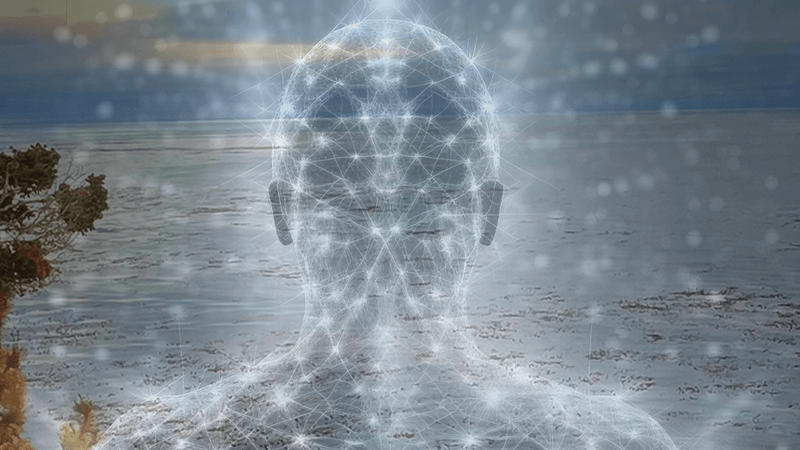
Part 2 of 2
My lower dan tian, my energy center, is suffering. I didn’t know that when I walked into the Big Yurt, but I know it now, and it explains a lot. I’ve been running on empty, tap dancing as fast as I can while my cortisol reserve is nearly tapped out. My energetic personality has been writing checks my qi cannot cash. I needed a supercharge. My magical thinking hopefulness was at a 10. So were my what-if-I-don’t- like-this fears.
I kicked off my shoes and walked in with a touch of skepticism mixed with my hope. Was this going to be all lecture? Too theoretical? Would I spend five days bored and fidgety and mentally reorganizing my inbox, outbox, and metaphorical litter box?
Naturally, the first thing I noticed was that I was entering a room filled with men. Esalen programming usually skews heavily female. But the Sleep Alchemy workshop drew a different crowd: more men than women, several couples, people who had traveled far and wide to attend. There was a couple from North Carolina, and one man came all the way from Siena, Italy just for this workshop. I felt the energy in the room shift before anything began. We weren’t convening for a week of sound baths (though I love those too). Our intention was to find other ways to access a path of rest and onward to perhaps some of our deepest sleep.
Simon Cox and Jeff Reid spent six and seven years, respectively, living in the Wudang region of China, studying under Master Yuan Xiugang at the Wudang Daoist Traditional Kung Fu Academy. They learned through deep study, sacrifice, and struggle. These men would absolutely not be classified as wellness facilitators in any conventional sense. They’re transmission vessels for a lineage. What they brought into that yurt was not a curriculum. It was a universe.
The Daoist body, they explained, is an empire. The heart is the sovereign emperor — wise, tender, the seat of consciousness. The lungs are the chancellor, outward-facing, negotiating fuel and power. The liver is the general, known for bravery. The spleen is the granary officer. The kidneys are the minister of power, keeper of deep preserves, repository of ancestral memory — the place where, as Simon put it, “we slay the dragon.” The brain is an extension of the kidneys. The gallbladder is the emperor’s advisor.
I found myself seduced by these metaphors in a way I hadn’t expected. I wanted to speak in these terms in all aspects of my life. That night, back in my room, I googled how long it takes to become an acupuncturist. Eight years. I would have to find another, faster way to immerse myself in this world. Qigong, maybe. Or tai chi.
(I’ve already earmarked Qigong workshops at the end of this month and in September, Primordial Qigong in November, and Essential Qigong and Creative Tai Ji in November and December.)
Next steps aside, other than sitting on pillow-backed backjacks and grabbing cozy blankets, all I had to do to succeed in this workshop was lie down. And yet, this is not as simple as it sounds after spending thirty years treating the horizontal state as my battleground. But here, lying down was the assignment. If I woke up at 3 am, there was nowhere I actually had to be at 8 am. (Especially when breakfast is until 9:45 am.) There was nothing to optimize. The hardest thing I would have to do that day was remain supine. How revolutionary! To surrender and forget my calendar, put a pause on deadlines and obligations, and just lean in — and down. Yes, I am fully aware of how sad that sounds, and it felt revolutionary all the same.
For the first time in my adult life, a crappy night’s sleep was not a potential spiral into catastrophe. There was no damage to tally in the morning. There was only one thing to do: Return to the yurt. Get back on your mat. You are not wasting the day. Resting is the day. The gift of that permission, to lie down without guilt, without the capitalism of productivity whispering that I should be doing something — it’s like nothing I have experienced. We spend so much of our lives apologizing for needing rest. Here, rest was the curriculum.
What Simon and Jeff shared, their wisdom distilled from years of sitting toward mastery in Wudang, arrived as narrative, and I bought in completely.
You have five protectors. They stand guard at every portal of your body — every place where the outside world enters you, and where you meet it.
In the caves of your ear canals: black dragons. Coiled, ancient, sleeping.
Behind your eyelids: emerald green leopards. Pacing softly, standing guard.
At your heart, at your mouth: a red crane. Wings folded. Luminous.
Coiled above your head, at the seat of your third eye: a yellow boa constrictor. Slow and sovereign.
In your nostrils: white tigers. Snug. Breathing with you.
These guardians are not here to frighten. They are here because you are, I am, worth guarding.
I followed every step without resistance. My mind, which typically treats guided meditation as an opportunity to mentally draft emails, stayed in place, caught up in the story. There is a cartographic precision to the way Simon and Jeff map the interior body, the subtle body. These are coordinates rather than feelings, destinations rather than suggestions, and my mind responded to it like a compass finding north. As someone who struggled to feel something vague, I resonated with this perfectly articulated narrative map.
In my ordinary life, I am practically homicidal at the sounds of snoring and heavy breathing. All forms of this send me into a private murderous spiral that I can only manage, barely, through clenched spiritual effort. Misophonia is the clinical term I diagnosed myself with. For me, it is exclusively the sounds of breath. And yes, there were a few occasional snorers in that yurt. I mostly let it go because Simon and Jeff had given me somewhere else to be. I was visiting my kidneys, which felt immediately and inexplicably like home. A room I’d grown up in. Familiar and cozy in a way I couldn’t explain. I dropped in and stayed. The snoring was undeniable evidence that something had shifted within me. Some people in that room were genuinely, deeply asleep. In the middle of the day, surrounded by 22 strangers, while two men with Daoist topknots described yellow serpents coiled above our heads. Together, we were cultivating spiritual harmony and preserving our bodily energy.
Full disclosure: I never fully slept in the workshop, but I did travel. I found the hypnagogic state, that middle realm between sleeping and waking, and learned to live there rather than fight my way over to one shore or the other. Simon and Jeff introduced us to Zhuangzi, the ancient Daoist philosopher who dreamed he was a butterfly and woke uncertain: was he a man who had dreamed of being a butterfly, or a butterfly now dreaming he was a man? That Vanilla Sky-inspired feeling resonated. Rest is not a riddle, but rather my chance to stop policing the borders between states of consciousness — to start inhabiting all those states without stress, since I have zero control either way.
There was a mantra they sent us home with: I am asleep and this is a dream. This sentence was not designed for us to dissociate from reality, but more an invitation to loosen the grip we keep on it. I say it daily now, two months later when lying flat on my shakti mat. On an acupressure bed of needles, it flows easily.
By the fourth day, I had dropped deep enough into the lower dan tian, my second brain, for some internal alchemy to unfold. There, I got to better acquaint myself with the primordial turtle through a microcosmic orbit. Ancient, patient, and enormous, the anchoring turtle has been there since before we were born and will be there after. We began our turtle breathing, sinking qi into the pelvic floor. With every familiar expectation to slip into the bliss of deep rest, I found myself distracted by my awakened and very raw jing. With my mind dropped into this ancient meditative state, my logical brain had also relaxed. So much so, that my biological and instinctual drives bubbled up, unfiltered. I’d stimulated my vagus nerve through breath! Thirty years of a threat-response nervous system, and here was evidence that something had genuinely shifted.
Of course, then the heart was another matter entirely. Every time Simon or Jeff guided us there, I drifted — avoidant, unable to linger. It took until the third day to understand why. The heart is the sovereign emperor, where everything unresolved comes to present itself. At 3 am, in the dark, when I have nowhere left to hide, I have been avoiding it. But now I know where to go. That feels like a beginning rather than a defeat.
Of all the organs I visited that week, the kidneys were my Wudang clan homies. The spleen was a new friend I liked enormously — warm, unhurried, the kind of presence you want to know better. The liver was fine, a kind neighbor. The lungs, a polite acquaintance. But the heart kept stopping me. And I think I finally understand why. The heart is where I’ve been storing decades of making myself small — contracting, accommodating, disappearing to maintain closeness with people who couldn’t meet me where I was. That’s a lot to sit with in a quiet room. Going forward, I’m done contracting to fit the unresolved anger and discomfort of others. The organs taught me that much.
There is another phrase from that week I keep returning to. It’s etched several times across my Esalen notebook: It is not the slumber of reason that creates monsters. It is its incessant wakefulness.
I sleep, but not enough. My intermittent shifts of deep sleep are mixed with wide-awake energy. Those waking hours that I called productivity and ambition. What I didn’t call it, until that late April week in the Big Yurt, was what it actually was: an exhausting and unnecessary war against rest.
One afternoon, I sat at what I’ve come to think of as my spot (along with everyone else), the bench seating called the Edge of the World, where you can see the Baths below and the Pacific beyond. I found myself wondering: if the Daoist body map corresponds to the geography of China, and the Ayurvedic subtle body map corresponds to India, what would a subtle body map of Esalen look like? And would the spleen, that warm, nourishing granary officer, be right here at the Edge?
There is something illuminating about being a guest here rather than an employee. I have spent four years on this land writing about it, advocating for it, representing it. But to sit in that yurt as someone who had simply shown up to learn something was different. Like when I first arrived at Esalen as a guest back in 2017 — five years before my employment here. It was for Cassandra Vietan’s How We Change and Why We Don’t. Proof, I suppose, that I’ve been trying for a while.
Did I sleep perfectly that week? No. Did I grab my phone at 3 am? Once or twice, yes. How about now, nearly six weeks later? I am not going to tell you I’m miraculously cured. Anyone who says a single week can fix a thirty-year sleep disorder is exaggerating. What I can say is that I am changed. Not fixed, but changed. There is a perspective that wasn’t there before. A depth, a reference. A set of tools I am actually using. And something more important than any of that: I have stopped participating in the capitalist mining of sleep. I don’t accept the cultural insistence that poor sleep is a productivity problem to be optimized rather than a signal from a body that deserves to be heard. I am learning, slowly and imperfectly, to listen to mine.
The Wudang lineage is not mine by birth. But the body it maps, that sovereign empire of kidneys and cranes and coiled serpents, that one is entirely mine. Simon and Jeff simply handed me the coordinates. Sleep Alchemy didn’t cure me. It did something better. It gave me a place to go inside myself that isn’t the 3 am spiral, the phone, the cortisol, the war. A place that is ancient and patient and has always been there. Now I know how to knock.
If you missed part 1, find it here.

“Remembering to be as self compassionate as I can and praying to the divine that we're all a part of.”
–Aaron
“Prayer, reading, meditation, walking.”
–Karen
“Erratically — which is an ongoing stream of practice to find peace.”
–Charles
“Try on a daily basis to be kind to myself and to realize that making mistakes is a part of the human condition. Learning from our mistakes is a journey. But it starts with compassion and caring. First for oneself.”
–Steve
“Physically: aerobic exercise, volleyball, ice hockey, cycling, sailing. Emotionally: unfortunately I have to work to ‘not care’ about people or situations which may end painfully. Along the lines of ‘attachment is the source of suffering’, so best to avoid it or limit its scope. Sad though because it could also be the source of great joy. Is it worth the risk?“
–Rainer


“It's time for my heart to be nurtured on one level yet contained on another. To go easy on me and to allow my feelings to be validated, not judged harshly. On the other hand, to let the heart rule with equanimity and not lead the mind and body around like a master.”
–Suzanne
“I spend time thinking of everything I am grateful for, and I try to develop my ability to express compassion for myself and others without reservation. I take time to do the things I need to do to keep myself healthy and happy. This includes taking experiential workshops, fostering relationships, and participating within groups which have a similar interest to become a more compassionate and fulfilled being.“
–Peter


“Self-forgiveness for my own judgments. And oh yeah, coming to Esalen.”
–David B.
“Hmm, this is a tough one! I guess I take care of my heart through fostering relationships with people I feel connected to. Spending quality time with them (whether we're on the phone, through messages/letters, on Zoom, or in-person). Being there for them, listening to them, sharing what's going on with me, my struggles and my successes... like we do in the Esalen weekly Friends of Esalen Zoom sessions!”
–Lori

“I remind myself in many ways of the fact that " Love is all there is!" LOVE is the prize and this one precious life is the stage we get to learn our lessons. I get out into nature, hike, camp, river kayak, fly fish, garden, I create, I dance (not enough!), and I remain grateful for each day, each breath, each moment. Being in the moment, awake, and remembering the gift of life and my feeling of gratitude for all of creation.”
–Steven
“My physical heart by limiting stress and eating a heart-healthy diet. My emotional heart by staying in love with the world and by knowing that all disappointment and loss will pass.“
–David Z.
Today, September 29, is World Heart Day. Strike up a conversation with your own heart and as you feel comfortable, encourage others to do the same. As part of our own transformations and self-care, we sometimes ask for others to illuminate and enliven our hearts or speak our love language.
What if we could do this for ourselves too, even if just for today… or to start a heart practice, forever?
For other upcoming Esalen workshops focused on sleep and rest, check out The Art of Non-Sleep Deep Rest; Yoga Nidra: Rest, Restore, and Remember Who You Are; Nourish; Exploring the Mind Through Liminal Dreaming; and Sleep, Dream, Death, and Liberation. You can also purchase books by Sleep Alchemy workshop leaders Simon Cox and Jeff Reid.
Shira Levine is the Director of Communications & Storytelling at Esalen Institute.
Part 2 of 2
My lower dan tian, my energy center, is suffering. I didn’t know that when I walked into the Big Yurt, but I know it now, and it explains a lot. I’ve been running on empty, tap dancing as fast as I can while my cortisol reserve is nearly tapped out. My energetic personality has been writing checks my qi cannot cash. I needed a supercharge. My magical thinking hopefulness was at a 10. So were my what-if-I-don’t- like-this fears.
I kicked off my shoes and walked in with a touch of skepticism mixed with my hope. Was this going to be all lecture? Too theoretical? Would I spend five days bored and fidgety and mentally reorganizing my inbox, outbox, and metaphorical litter box?
Naturally, the first thing I noticed was that I was entering a room filled with men. Esalen programming usually skews heavily female. But the Sleep Alchemy workshop drew a different crowd: more men than women, several couples, people who had traveled far and wide to attend. There was a couple from North Carolina, and one man came all the way from Siena, Italy just for this workshop. I felt the energy in the room shift before anything began. We weren’t convening for a week of sound baths (though I love those too). Our intention was to find other ways to access a path of rest and onward to perhaps some of our deepest sleep.
Simon Cox and Jeff Reid spent six and seven years, respectively, living in the Wudang region of China, studying under Master Yuan Xiugang at the Wudang Daoist Traditional Kung Fu Academy. They learned through deep study, sacrifice, and struggle. These men would absolutely not be classified as wellness facilitators in any conventional sense. They’re transmission vessels for a lineage. What they brought into that yurt was not a curriculum. It was a universe.
The Daoist body, they explained, is an empire. The heart is the sovereign emperor — wise, tender, the seat of consciousness. The lungs are the chancellor, outward-facing, negotiating fuel and power. The liver is the general, known for bravery. The spleen is the granary officer. The kidneys are the minister of power, keeper of deep preserves, repository of ancestral memory — the place where, as Simon put it, “we slay the dragon.” The brain is an extension of the kidneys. The gallbladder is the emperor’s advisor.
I found myself seduced by these metaphors in a way I hadn’t expected. I wanted to speak in these terms in all aspects of my life. That night, back in my room, I googled how long it takes to become an acupuncturist. Eight years. I would have to find another, faster way to immerse myself in this world. Qigong, maybe. Or tai chi.
(I’ve already earmarked Qigong workshops at the end of this month and in September, Primordial Qigong in November, and Essential Qigong and Creative Tai Ji in November and December.)
Next steps aside, other than sitting on pillow-backed backjacks and grabbing cozy blankets, all I had to do to succeed in this workshop was lie down. And yet, this is not as simple as it sounds after spending thirty years treating the horizontal state as my battleground. But here, lying down was the assignment. If I woke up at 3 am, there was nowhere I actually had to be at 8 am. (Especially when breakfast is until 9:45 am.) There was nothing to optimize. The hardest thing I would have to do that day was remain supine. How revolutionary! To surrender and forget my calendar, put a pause on deadlines and obligations, and just lean in — and down. Yes, I am fully aware of how sad that sounds, and it felt revolutionary all the same.
For the first time in my adult life, a crappy night’s sleep was not a potential spiral into catastrophe. There was no damage to tally in the morning. There was only one thing to do: Return to the yurt. Get back on your mat. You are not wasting the day. Resting is the day. The gift of that permission, to lie down without guilt, without the capitalism of productivity whispering that I should be doing something — it’s like nothing I have experienced. We spend so much of our lives apologizing for needing rest. Here, rest was the curriculum.
What Simon and Jeff shared, their wisdom distilled from years of sitting toward mastery in Wudang, arrived as narrative, and I bought in completely.
You have five protectors. They stand guard at every portal of your body — every place where the outside world enters you, and where you meet it.
In the caves of your ear canals: black dragons. Coiled, ancient, sleeping.
Behind your eyelids: emerald green leopards. Pacing softly, standing guard.
At your heart, at your mouth: a red crane. Wings folded. Luminous.
Coiled above your head, at the seat of your third eye: a yellow boa constrictor. Slow and sovereign.
In your nostrils: white tigers. Snug. Breathing with you.
These guardians are not here to frighten. They are here because you are, I am, worth guarding.
I followed every step without resistance. My mind, which typically treats guided meditation as an opportunity to mentally draft emails, stayed in place, caught up in the story. There is a cartographic precision to the way Simon and Jeff map the interior body, the subtle body. These are coordinates rather than feelings, destinations rather than suggestions, and my mind responded to it like a compass finding north. As someone who struggled to feel something vague, I resonated with this perfectly articulated narrative map.
In my ordinary life, I am practically homicidal at the sounds of snoring and heavy breathing. All forms of this send me into a private murderous spiral that I can only manage, barely, through clenched spiritual effort. Misophonia is the clinical term I diagnosed myself with. For me, it is exclusively the sounds of breath. And yes, there were a few occasional snorers in that yurt. I mostly let it go because Simon and Jeff had given me somewhere else to be. I was visiting my kidneys, which felt immediately and inexplicably like home. A room I’d grown up in. Familiar and cozy in a way I couldn’t explain. I dropped in and stayed. The snoring was undeniable evidence that something had shifted within me. Some people in that room were genuinely, deeply asleep. In the middle of the day, surrounded by 22 strangers, while two men with Daoist topknots described yellow serpents coiled above our heads. Together, we were cultivating spiritual harmony and preserving our bodily energy.
Full disclosure: I never fully slept in the workshop, but I did travel. I found the hypnagogic state, that middle realm between sleeping and waking, and learned to live there rather than fight my way over to one shore or the other. Simon and Jeff introduced us to Zhuangzi, the ancient Daoist philosopher who dreamed he was a butterfly and woke uncertain: was he a man who had dreamed of being a butterfly, or a butterfly now dreaming he was a man? That Vanilla Sky-inspired feeling resonated. Rest is not a riddle, but rather my chance to stop policing the borders between states of consciousness — to start inhabiting all those states without stress, since I have zero control either way.
There was a mantra they sent us home with: I am asleep and this is a dream. This sentence was not designed for us to dissociate from reality, but more an invitation to loosen the grip we keep on it. I say it daily now, two months later when lying flat on my shakti mat. On an acupressure bed of needles, it flows easily.
By the fourth day, I had dropped deep enough into the lower dan tian, my second brain, for some internal alchemy to unfold. There, I got to better acquaint myself with the primordial turtle through a microcosmic orbit. Ancient, patient, and enormous, the anchoring turtle has been there since before we were born and will be there after. We began our turtle breathing, sinking qi into the pelvic floor. With every familiar expectation to slip into the bliss of deep rest, I found myself distracted by my awakened and very raw jing. With my mind dropped into this ancient meditative state, my logical brain had also relaxed. So much so, that my biological and instinctual drives bubbled up, unfiltered. I’d stimulated my vagus nerve through breath! Thirty years of a threat-response nervous system, and here was evidence that something had genuinely shifted.
Of course, then the heart was another matter entirely. Every time Simon or Jeff guided us there, I drifted — avoidant, unable to linger. It took until the third day to understand why. The heart is the sovereign emperor, where everything unresolved comes to present itself. At 3 am, in the dark, when I have nowhere left to hide, I have been avoiding it. But now I know where to go. That feels like a beginning rather than a defeat.
Of all the organs I visited that week, the kidneys were my Wudang clan homies. The spleen was a new friend I liked enormously — warm, unhurried, the kind of presence you want to know better. The liver was fine, a kind neighbor. The lungs, a polite acquaintance. But the heart kept stopping me. And I think I finally understand why. The heart is where I’ve been storing decades of making myself small — contracting, accommodating, disappearing to maintain closeness with people who couldn’t meet me where I was. That’s a lot to sit with in a quiet room. Going forward, I’m done contracting to fit the unresolved anger and discomfort of others. The organs taught me that much.
There is another phrase from that week I keep returning to. It’s etched several times across my Esalen notebook: It is not the slumber of reason that creates monsters. It is its incessant wakefulness.
I sleep, but not enough. My intermittent shifts of deep sleep are mixed with wide-awake energy. Those waking hours that I called productivity and ambition. What I didn’t call it, until that late April week in the Big Yurt, was what it actually was: an exhausting and unnecessary war against rest.
One afternoon, I sat at what I’ve come to think of as my spot (along with everyone else), the bench seating called the Edge of the World, where you can see the Baths below and the Pacific beyond. I found myself wondering: if the Daoist body map corresponds to the geography of China, and the Ayurvedic subtle body map corresponds to India, what would a subtle body map of Esalen look like? And would the spleen, that warm, nourishing granary officer, be right here at the Edge?
There is something illuminating about being a guest here rather than an employee. I have spent four years on this land writing about it, advocating for it, representing it. But to sit in that yurt as someone who had simply shown up to learn something was different. Like when I first arrived at Esalen as a guest back in 2017 — five years before my employment here. It was for Cassandra Vietan’s How We Change and Why We Don’t. Proof, I suppose, that I’ve been trying for a while.
Did I sleep perfectly that week? No. Did I grab my phone at 3 am? Once or twice, yes. How about now, nearly six weeks later? I am not going to tell you I’m miraculously cured. Anyone who says a single week can fix a thirty-year sleep disorder is exaggerating. What I can say is that I am changed. Not fixed, but changed. There is a perspective that wasn’t there before. A depth, a reference. A set of tools I am actually using. And something more important than any of that: I have stopped participating in the capitalist mining of sleep. I don’t accept the cultural insistence that poor sleep is a productivity problem to be optimized rather than a signal from a body that deserves to be heard. I am learning, slowly and imperfectly, to listen to mine.
The Wudang lineage is not mine by birth. But the body it maps, that sovereign empire of kidneys and cranes and coiled serpents, that one is entirely mine. Simon and Jeff simply handed me the coordinates. Sleep Alchemy didn’t cure me. It did something better. It gave me a place to go inside myself that isn’t the 3 am spiral, the phone, the cortisol, the war. A place that is ancient and patient and has always been there. Now I know how to knock.
If you missed part 1, find it here.
“Remembering to be as self compassionate as I can and praying to the divine that we're all a part of.”
–Aaron
“Prayer, reading, meditation, walking.”
–Karen
“Erratically — which is an ongoing stream of practice to find peace.”
–Charles
“Try on a daily basis to be kind to myself and to realize that making mistakes is a part of the human condition. Learning from our mistakes is a journey. But it starts with compassion and caring. First for oneself.”
–Steve
“Physically: aerobic exercise, volleyball, ice hockey, cycling, sailing. Emotionally: unfortunately I have to work to ‘not care’ about people or situations which may end painfully. Along the lines of ‘attachment is the source of suffering’, so best to avoid it or limit its scope. Sad though because it could also be the source of great joy. Is it worth the risk?“
–Rainer
“It's time for my heart to be nurtured on one level yet contained on another. To go easy on me and to allow my feelings to be validated, not judged harshly. On the other hand, to let the heart rule with equanimity and not lead the mind and body around like a master.”
–Suzanne
“I spend time thinking of everything I am grateful for, and I try to develop my ability to express compassion for myself and others without reservation. I take time to do the things I need to do to keep myself healthy and happy. This includes taking experiential workshops, fostering relationships, and participating within groups which have a similar interest to become a more compassionate and fulfilled being.“
–Peter
“Self-forgiveness for my own judgments. And oh yeah, coming to Esalen.”
–David B.
“Hmm, this is a tough one! I guess I take care of my heart through fostering relationships with people I feel connected to. Spending quality time with them (whether we're on the phone, through messages/letters, on Zoom, or in-person). Being there for them, listening to them, sharing what's going on with me, my struggles and my successes... like we do in the Esalen weekly Friends of Esalen Zoom sessions!”
–Lori
“I remind myself in many ways of the fact that " Love is all there is!" LOVE is the prize and this one precious life is the stage we get to learn our lessons. I get out into nature, hike, camp, river kayak, fly fish, garden, I create, I dance (not enough!), and I remain grateful for each day, each breath, each moment. Being in the moment, awake, and remembering the gift of life and my feeling of gratitude for all of creation.”
–Steven
“My physical heart by limiting stress and eating a heart-healthy diet. My emotional heart by staying in love with the world and by knowing that all disappointment and loss will pass.“
–David Z.
Today, September 29, is World Heart Day. Strike up a conversation with your own heart and as you feel comfortable, encourage others to do the same. As part of our own transformations and self-care, we sometimes ask for others to illuminate and enliven our hearts or speak our love language.
What if we could do this for ourselves too, even if just for today… or to start a heart practice, forever?
For other upcoming Esalen workshops focused on sleep and rest, check out The Art of Non-Sleep Deep Rest; Yoga Nidra: Rest, Restore, and Remember Who You Are; Nourish; Exploring the Mind Through Liminal Dreaming; and Sleep, Dream, Death, and Liberation. You can also purchase books by Sleep Alchemy workshop leaders Simon Cox and Jeff Reid.
Shira Levine is the Director of Communications & Storytelling at Esalen Institute.
Part 2 of 2
My lower dan tian, my energy center, is suffering. I didn’t know that when I walked into the Big Yurt, but I know it now, and it explains a lot. I’ve been running on empty, tap dancing as fast as I can while my cortisol reserve is nearly tapped out. My energetic personality has been writing checks my qi cannot cash. I needed a supercharge. My magical thinking hopefulness was at a 10. So were my what-if-I-don’t- like-this fears.
I kicked off my shoes and walked in with a touch of skepticism mixed with my hope. Was this going to be all lecture? Too theoretical? Would I spend five days bored and fidgety and mentally reorganizing my inbox, outbox, and metaphorical litter box?
Naturally, the first thing I noticed was that I was entering a room filled with men. Esalen programming usually skews heavily female. But the Sleep Alchemy workshop drew a different crowd: more men than women, several couples, people who had traveled far and wide to attend. There was a couple from North Carolina, and one man came all the way from Siena, Italy just for this workshop. I felt the energy in the room shift before anything began. We weren’t convening for a week of sound baths (though I love those too). Our intention was to find other ways to access a path of rest and onward to perhaps some of our deepest sleep.
Simon Cox and Jeff Reid spent six and seven years, respectively, living in the Wudang region of China, studying under Master Yuan Xiugang at the Wudang Daoist Traditional Kung Fu Academy. They learned through deep study, sacrifice, and struggle. These men would absolutely not be classified as wellness facilitators in any conventional sense. They’re transmission vessels for a lineage. What they brought into that yurt was not a curriculum. It was a universe.
The Daoist body, they explained, is an empire. The heart is the sovereign emperor — wise, tender, the seat of consciousness. The lungs are the chancellor, outward-facing, negotiating fuel and power. The liver is the general, known for bravery. The spleen is the granary officer. The kidneys are the minister of power, keeper of deep preserves, repository of ancestral memory — the place where, as Simon put it, “we slay the dragon.” The brain is an extension of the kidneys. The gallbladder is the emperor’s advisor.
I found myself seduced by these metaphors in a way I hadn’t expected. I wanted to speak in these terms in all aspects of my life. That night, back in my room, I googled how long it takes to become an acupuncturist. Eight years. I would have to find another, faster way to immerse myself in this world. Qigong, maybe. Or tai chi.
(I’ve already earmarked Qigong workshops at the end of this month and in September, Primordial Qigong in November, and Essential Qigong and Creative Tai Ji in November and December.)
Next steps aside, other than sitting on pillow-backed backjacks and grabbing cozy blankets, all I had to do to succeed in this workshop was lie down. And yet, this is not as simple as it sounds after spending thirty years treating the horizontal state as my battleground. But here, lying down was the assignment. If I woke up at 3 am, there was nowhere I actually had to be at 8 am. (Especially when breakfast is until 9:45 am.) There was nothing to optimize. The hardest thing I would have to do that day was remain supine. How revolutionary! To surrender and forget my calendar, put a pause on deadlines and obligations, and just lean in — and down. Yes, I am fully aware of how sad that sounds, and it felt revolutionary all the same.
For the first time in my adult life, a crappy night’s sleep was not a potential spiral into catastrophe. There was no damage to tally in the morning. There was only one thing to do: Return to the yurt. Get back on your mat. You are not wasting the day. Resting is the day. The gift of that permission, to lie down without guilt, without the capitalism of productivity whispering that I should be doing something — it’s like nothing I have experienced. We spend so much of our lives apologizing for needing rest. Here, rest was the curriculum.
What Simon and Jeff shared, their wisdom distilled from years of sitting toward mastery in Wudang, arrived as narrative, and I bought in completely.
You have five protectors. They stand guard at every portal of your body — every place where the outside world enters you, and where you meet it.
In the caves of your ear canals: black dragons. Coiled, ancient, sleeping.
Behind your eyelids: emerald green leopards. Pacing softly, standing guard.
At your heart, at your mouth: a red crane. Wings folded. Luminous.
Coiled above your head, at the seat of your third eye: a yellow boa constrictor. Slow and sovereign.
In your nostrils: white tigers. Snug. Breathing with you.
These guardians are not here to frighten. They are here because you are, I am, worth guarding.
I followed every step without resistance. My mind, which typically treats guided meditation as an opportunity to mentally draft emails, stayed in place, caught up in the story. There is a cartographic precision to the way Simon and Jeff map the interior body, the subtle body. These are coordinates rather than feelings, destinations rather than suggestions, and my mind responded to it like a compass finding north. As someone who struggled to feel something vague, I resonated with this perfectly articulated narrative map.
In my ordinary life, I am practically homicidal at the sounds of snoring and heavy breathing. All forms of this send me into a private murderous spiral that I can only manage, barely, through clenched spiritual effort. Misophonia is the clinical term I diagnosed myself with. For me, it is exclusively the sounds of breath. And yes, there were a few occasional snorers in that yurt. I mostly let it go because Simon and Jeff had given me somewhere else to be. I was visiting my kidneys, which felt immediately and inexplicably like home. A room I’d grown up in. Familiar and cozy in a way I couldn’t explain. I dropped in and stayed. The snoring was undeniable evidence that something had shifted within me. Some people in that room were genuinely, deeply asleep. In the middle of the day, surrounded by 22 strangers, while two men with Daoist topknots described yellow serpents coiled above our heads. Together, we were cultivating spiritual harmony and preserving our bodily energy.
Full disclosure: I never fully slept in the workshop, but I did travel. I found the hypnagogic state, that middle realm between sleeping and waking, and learned to live there rather than fight my way over to one shore or the other. Simon and Jeff introduced us to Zhuangzi, the ancient Daoist philosopher who dreamed he was a butterfly and woke uncertain: was he a man who had dreamed of being a butterfly, or a butterfly now dreaming he was a man? That Vanilla Sky-inspired feeling resonated. Rest is not a riddle, but rather my chance to stop policing the borders between states of consciousness — to start inhabiting all those states without stress, since I have zero control either way.
There was a mantra they sent us home with: I am asleep and this is a dream. This sentence was not designed for us to dissociate from reality, but more an invitation to loosen the grip we keep on it. I say it daily now, two months later when lying flat on my shakti mat. On an acupressure bed of needles, it flows easily.
By the fourth day, I had dropped deep enough into the lower dan tian, my second brain, for some internal alchemy to unfold. There, I got to better acquaint myself with the primordial turtle through a microcosmic orbit. Ancient, patient, and enormous, the anchoring turtle has been there since before we were born and will be there after. We began our turtle breathing, sinking qi into the pelvic floor. With every familiar expectation to slip into the bliss of deep rest, I found myself distracted by my awakened and very raw jing. With my mind dropped into this ancient meditative state, my logical brain had also relaxed. So much so, that my biological and instinctual drives bubbled up, unfiltered. I’d stimulated my vagus nerve through breath! Thirty years of a threat-response nervous system, and here was evidence that something had genuinely shifted.
Of course, then the heart was another matter entirely. Every time Simon or Jeff guided us there, I drifted — avoidant, unable to linger. It took until the third day to understand why. The heart is the sovereign emperor, where everything unresolved comes to present itself. At 3 am, in the dark, when I have nowhere left to hide, I have been avoiding it. But now I know where to go. That feels like a beginning rather than a defeat.
Of all the organs I visited that week, the kidneys were my Wudang clan homies. The spleen was a new friend I liked enormously — warm, unhurried, the kind of presence you want to know better. The liver was fine, a kind neighbor. The lungs, a polite acquaintance. But the heart kept stopping me. And I think I finally understand why. The heart is where I’ve been storing decades of making myself small — contracting, accommodating, disappearing to maintain closeness with people who couldn’t meet me where I was. That’s a lot to sit with in a quiet room. Going forward, I’m done contracting to fit the unresolved anger and discomfort of others. The organs taught me that much.
There is another phrase from that week I keep returning to. It’s etched several times across my Esalen notebook: It is not the slumber of reason that creates monsters. It is its incessant wakefulness.
I sleep, but not enough. My intermittent shifts of deep sleep are mixed with wide-awake energy. Those waking hours that I called productivity and ambition. What I didn’t call it, until that late April week in the Big Yurt, was what it actually was: an exhausting and unnecessary war against rest.
One afternoon, I sat at what I’ve come to think of as my spot (along with everyone else), the bench seating called the Edge of the World, where you can see the Baths below and the Pacific beyond. I found myself wondering: if the Daoist body map corresponds to the geography of China, and the Ayurvedic subtle body map corresponds to India, what would a subtle body map of Esalen look like? And would the spleen, that warm, nourishing granary officer, be right here at the Edge?
There is something illuminating about being a guest here rather than an employee. I have spent four years on this land writing about it, advocating for it, representing it. But to sit in that yurt as someone who had simply shown up to learn something was different. Like when I first arrived at Esalen as a guest back in 2017 — five years before my employment here. It was for Cassandra Vietan’s How We Change and Why We Don’t. Proof, I suppose, that I’ve been trying for a while.
Did I sleep perfectly that week? No. Did I grab my phone at 3 am? Once or twice, yes. How about now, nearly six weeks later? I am not going to tell you I’m miraculously cured. Anyone who says a single week can fix a thirty-year sleep disorder is exaggerating. What I can say is that I am changed. Not fixed, but changed. There is a perspective that wasn’t there before. A depth, a reference. A set of tools I am actually using. And something more important than any of that: I have stopped participating in the capitalist mining of sleep. I don’t accept the cultural insistence that poor sleep is a productivity problem to be optimized rather than a signal from a body that deserves to be heard. I am learning, slowly and imperfectly, to listen to mine.
The Wudang lineage is not mine by birth. But the body it maps, that sovereign empire of kidneys and cranes and coiled serpents, that one is entirely mine. Simon and Jeff simply handed me the coordinates. Sleep Alchemy didn’t cure me. It did something better. It gave me a place to go inside myself that isn’t the 3 am spiral, the phone, the cortisol, the war. A place that is ancient and patient and has always been there. Now I know how to knock.
If you missed part 1, find it here.
“Remembering to be as self compassionate as I can and praying to the divine that we're all a part of.”
–Aaron
“Prayer, reading, meditation, walking.”
–Karen
“Erratically — which is an ongoing stream of practice to find peace.”
–Charles
“Try on a daily basis to be kind to myself and to realize that making mistakes is a part of the human condition. Learning from our mistakes is a journey. But it starts with compassion and caring. First for oneself.”
–Steve
“Physically: aerobic exercise, volleyball, ice hockey, cycling, sailing. Emotionally: unfortunately I have to work to ‘not care’ about people or situations which may end painfully. Along the lines of ‘attachment is the source of suffering’, so best to avoid it or limit its scope. Sad though because it could also be the source of great joy. Is it worth the risk?“
–Rainer
“It's time for my heart to be nurtured on one level yet contained on another. To go easy on me and to allow my feelings to be validated, not judged harshly. On the other hand, to let the heart rule with equanimity and not lead the mind and body around like a master.”
–Suzanne
“I spend time thinking of everything I am grateful for, and I try to develop my ability to express compassion for myself and others without reservation. I take time to do the things I need to do to keep myself healthy and happy. This includes taking experiential workshops, fostering relationships, and participating within groups which have a similar interest to become a more compassionate and fulfilled being.“
–Peter
“Self-forgiveness for my own judgments. And oh yeah, coming to Esalen.”
–David B.
“Hmm, this is a tough one! I guess I take care of my heart through fostering relationships with people I feel connected to. Spending quality time with them (whether we're on the phone, through messages/letters, on Zoom, or in-person). Being there for them, listening to them, sharing what's going on with me, my struggles and my successes... like we do in the Esalen weekly Friends of Esalen Zoom sessions!”
–Lori
“I remind myself in many ways of the fact that " Love is all there is!" LOVE is the prize and this one precious life is the stage we get to learn our lessons. I get out into nature, hike, camp, river kayak, fly fish, garden, I create, I dance (not enough!), and I remain grateful for each day, each breath, each moment. Being in the moment, awake, and remembering the gift of life and my feeling of gratitude for all of creation.”
–Steven
“My physical heart by limiting stress and eating a heart-healthy diet. My emotional heart by staying in love with the world and by knowing that all disappointment and loss will pass.“
–David Z.
Today, September 29, is World Heart Day. Strike up a conversation with your own heart and as you feel comfortable, encourage others to do the same. As part of our own transformations and self-care, we sometimes ask for others to illuminate and enliven our hearts or speak our love language.
What if we could do this for ourselves too, even if just for today… or to start a heart practice, forever?
For other upcoming Esalen workshops focused on sleep and rest, check out The Art of Non-Sleep Deep Rest; Yoga Nidra: Rest, Restore, and Remember Who You Are; Nourish; Exploring the Mind Through Liminal Dreaming; and Sleep, Dream, Death, and Liberation. You can also purchase books by Sleep Alchemy workshop leaders Simon Cox and Jeff Reid.
Shira Levine is the Director of Communications & Storytelling at Esalen Institute.
Esalen Institute
55000 Highway 1
Big Sur, CA 93920

US: 1-831-667-3000

info@esalen.org