Ideas rarely remain within the boundaries of the disciplines that first brought them to Esalen. When Fritz Perls brought his radical approach to awareness and encounter to Esalen in the late 1960s, his work cross-pollinated with the experimental spirit of the Institute and then with Dick Price’s own evolving practice of Gestalt Awareness. Dick took what he learned from Fritz and shaped it into a gentler, more relational form of inquiry centered on presence, choice, and direct experience. Gestalt became something to practice vs something to simply study.
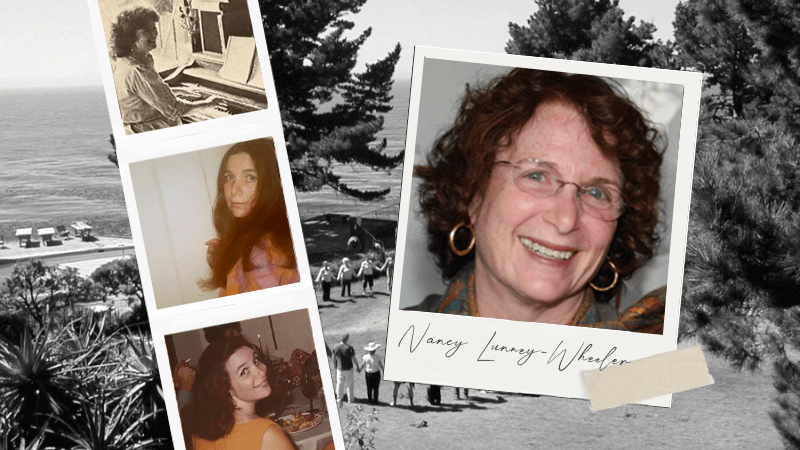
Nancy Lunney Wheeler encountered that world in the early 1970s. At the time, she was living in Los Angeles with her children and her first husband, working as a vocal coach and accompanist to help actors find their voices, and especially those who were convinced they could not sing. She came to Esalen initially for a Gestalt workshop with Dick Price. What she experienced there changed the direction of her life. She began to understand voice, feeling, and self-expression not as separate domains, but as parts of the same human experience.
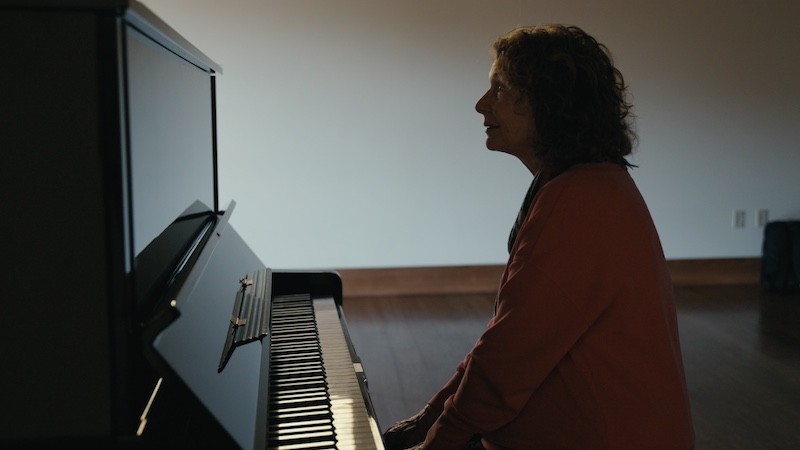
When Nancy returned to Esalen as a Work Scholar, she organized a staff musical revue and began working with members of the community through singing. People gathered around the piano to sing from their hearts while Nancy accompanied them. Even Dick Price came to her for sessions, wanting to sing a song to his young daughter, Jenny. This musical process gradually revealed itself as something more: a way into emotion, memory, relationship, vulnerability, and presence.
Out of this convergence of Gestalt practice and a lifetime of working with the singing voice, Nancy developed Singing Gestalt. The premise is that the voice reveals what words sometimes conceal. Breath carries feeling. Tone carries history. A song can open a door to memories, longings, fears, and parts of ourselves that may be difficult to reach through conversation alone. With Nancy, singing is not performance. It is a form of contact.
Nancy’s creation was also shaped by the particular ecology of Esalen, where experimentation was a way of working. Over the next three decades, as Director of Programs, she helped create the conditions for thousands of teachers and tens of thousands of students to explore the edges of psychology, spirituality, creativity, embodiment, and human potential. Singing Gestalt was one of the practices that emerged from that fertile culture, and one that Nancy continues to teach today.
Her story is also woven into another important strand of Esalen’s Gestalt lineage. Nancy’s husband, Gordon Wheeler, is himself a leading Gestalt scholar, teacher, and practitioner whose work has helped extend Gestalt into relational, developmental, and systemic territory. Together, Nancy and Gordon developed Gestalt Relational Constellations, extending Gestalt’s focus beyond the individual to explore the larger relational and systemic patterns that shape our experience, including family, community, and other social contexts. Their work reflects another thread in the evolution of Gestalt: from inner experience, to relationship, to the wider systems in which we are all embedded.
It is fitting, then, that Nancy’s next Esalen workshop brings together yet another strand of the Institute’s long history of experimentation. In December, she will join anthropologist Tanya Luhrmann for Spiritual Yearning, a weekend exploring what happens when people experience longing for transcendence, mystery, or spiritual experience without necessarily having a traditional faith or ritual language to hold it. Tanya will bring her research into spiritual and supernatural experience; Nancy will bring the practice of finding a way through experience with the voice. Participants will have the opportunity not only to talk about spiritual yearning, but to explore it and to sing through their own journeys.
In that sense, the workshop represents something quintessentially Esalen: a conversation between disciplines, generations, and ways of knowing. And at its center is an idea Nancy has spent decades exploring — that sometimes, before we can explain what we feel, we have to give it a voice.

“Remembering to be as self compassionate as I can and praying to the divine that we're all a part of.”
–Aaron
“Prayer, reading, meditation, walking.”
–Karen
“Erratically — which is an ongoing stream of practice to find peace.”
–Charles
“Try on a daily basis to be kind to myself and to realize that making mistakes is a part of the human condition. Learning from our mistakes is a journey. But it starts with compassion and caring. First for oneself.”
–Steve
“Physically: aerobic exercise, volleyball, ice hockey, cycling, sailing. Emotionally: unfortunately I have to work to ‘not care’ about people or situations which may end painfully. Along the lines of ‘attachment is the source of suffering’, so best to avoid it or limit its scope. Sad though because it could also be the source of great joy. Is it worth the risk?“
–Rainer


“It's time for my heart to be nurtured on one level yet contained on another. To go easy on me and to allow my feelings to be validated, not judged harshly. On the other hand, to let the heart rule with equanimity and not lead the mind and body around like a master.”
–Suzanne
“I spend time thinking of everything I am grateful for, and I try to develop my ability to express compassion for myself and others without reservation. I take time to do the things I need to do to keep myself healthy and happy. This includes taking experiential workshops, fostering relationships, and participating within groups which have a similar interest to become a more compassionate and fulfilled being.“
–Peter


“Self-forgiveness for my own judgments. And oh yeah, coming to Esalen.”
–David B.
“Hmm, this is a tough one! I guess I take care of my heart through fostering relationships with people I feel connected to. Spending quality time with them (whether we're on the phone, through messages/letters, on Zoom, or in-person). Being there for them, listening to them, sharing what's going on with me, my struggles and my successes... like we do in the Esalen weekly Friends of Esalen Zoom sessions!”
–Lori

“I remind myself in many ways of the fact that " Love is all there is!" LOVE is the prize and this one precious life is the stage we get to learn our lessons. I get out into nature, hike, camp, river kayak, fly fish, garden, I create, I dance (not enough!), and I remain grateful for each day, each breath, each moment. Being in the moment, awake, and remembering the gift of life and my feeling of gratitude for all of creation.”
–Steven
“My physical heart by limiting stress and eating a heart-healthy diet. My emotional heart by staying in love with the world and by knowing that all disappointment and loss will pass.“
–David Z.
Today, September 29, is World Heart Day. Strike up a conversation with your own heart and as you feel comfortable, encourage others to do the same. As part of our own transformations and self-care, we sometimes ask for others to illuminate and enliven our hearts or speak our love language.
What if we could do this for ourselves too, even if just for today… or to start a heart practice, forever?
Ideas rarely remain within the boundaries of the disciplines that first brought them to Esalen. When Fritz Perls brought his radical approach to awareness and encounter to Esalen in the late 1960s, his work cross-pollinated with the experimental spirit of the Institute and then with Dick Price’s own evolving practice of Gestalt Awareness. Dick took what he learned from Fritz and shaped it into a gentler, more relational form of inquiry centered on presence, choice, and direct experience. Gestalt became something to practice vs something to simply study.
Nancy Lunney Wheeler encountered that world in the early 1970s. At the time, she was living in Los Angeles with her children and her first husband, working as a vocal coach and accompanist to help actors find their voices, and especially those who were convinced they could not sing. She came to Esalen initially for a Gestalt workshop with Dick Price. What she experienced there changed the direction of her life. She began to understand voice, feeling, and self-expression not as separate domains, but as parts of the same human experience.
When Nancy returned to Esalen as a Work Scholar, she organized a staff musical revue and began working with members of the community through singing. People gathered around the piano to sing from their hearts while Nancy accompanied them. Even Dick Price came to her for sessions, wanting to sing a song to his young daughter, Jenny. This musical process gradually revealed itself as something more: a way into emotion, memory, relationship, vulnerability, and presence.
Out of this convergence of Gestalt practice and a lifetime of working with the singing voice, Nancy developed Singing Gestalt. The premise is that the voice reveals what words sometimes conceal. Breath carries feeling. Tone carries history. A song can open a door to memories, longings, fears, and parts of ourselves that may be difficult to reach through conversation alone. With Nancy, singing is not performance. It is a form of contact.
Nancy’s creation was also shaped by the particular ecology of Esalen, where experimentation was a way of working. Over the next three decades, as Director of Programs, she helped create the conditions for thousands of teachers and tens of thousands of students to explore the edges of psychology, spirituality, creativity, embodiment, and human potential. Singing Gestalt was one of the practices that emerged from that fertile culture, and one that Nancy continues to teach today.
Her story is also woven into another important strand of Esalen’s Gestalt lineage. Nancy’s husband, Gordon Wheeler, is himself a leading Gestalt scholar, teacher, and practitioner whose work has helped extend Gestalt into relational, developmental, and systemic territory. Together, Nancy and Gordon developed Gestalt Relational Constellations, extending Gestalt’s focus beyond the individual to explore the larger relational and systemic patterns that shape our experience, including family, community, and other social contexts. Their work reflects another thread in the evolution of Gestalt: from inner experience, to relationship, to the wider systems in which we are all embedded.
It is fitting, then, that Nancy’s next Esalen workshop brings together yet another strand of the Institute’s long history of experimentation. In December, she will join anthropologist Tanya Luhrmann for Spiritual Yearning, a weekend exploring what happens when people experience longing for transcendence, mystery, or spiritual experience without necessarily having a traditional faith or ritual language to hold it. Tanya will bring her research into spiritual and supernatural experience; Nancy will bring the practice of finding a way through experience with the voice. Participants will have the opportunity not only to talk about spiritual yearning, but to explore it and to sing through their own journeys.
In that sense, the workshop represents something quintessentially Esalen: a conversation between disciplines, generations, and ways of knowing. And at its center is an idea Nancy has spent decades exploring — that sometimes, before we can explain what we feel, we have to give it a voice.
“Remembering to be as self compassionate as I can and praying to the divine that we're all a part of.”
–Aaron
“Prayer, reading, meditation, walking.”
–Karen
“Erratically — which is an ongoing stream of practice to find peace.”
–Charles
“Try on a daily basis to be kind to myself and to realize that making mistakes is a part of the human condition. Learning from our mistakes is a journey. But it starts with compassion and caring. First for oneself.”
–Steve
“Physically: aerobic exercise, volleyball, ice hockey, cycling, sailing. Emotionally: unfortunately I have to work to ‘not care’ about people or situations which may end painfully. Along the lines of ‘attachment is the source of suffering’, so best to avoid it or limit its scope. Sad though because it could also be the source of great joy. Is it worth the risk?“
–Rainer
“It's time for my heart to be nurtured on one level yet contained on another. To go easy on me and to allow my feelings to be validated, not judged harshly. On the other hand, to let the heart rule with equanimity and not lead the mind and body around like a master.”
–Suzanne
“I spend time thinking of everything I am grateful for, and I try to develop my ability to express compassion for myself and others without reservation. I take time to do the things I need to do to keep myself healthy and happy. This includes taking experiential workshops, fostering relationships, and participating within groups which have a similar interest to become a more compassionate and fulfilled being.“
–Peter
“Self-forgiveness for my own judgments. And oh yeah, coming to Esalen.”
–David B.
“Hmm, this is a tough one! I guess I take care of my heart through fostering relationships with people I feel connected to. Spending quality time with them (whether we're on the phone, through messages/letters, on Zoom, or in-person). Being there for them, listening to them, sharing what's going on with me, my struggles and my successes... like we do in the Esalen weekly Friends of Esalen Zoom sessions!”
–Lori
“I remind myself in many ways of the fact that " Love is all there is!" LOVE is the prize and this one precious life is the stage we get to learn our lessons. I get out into nature, hike, camp, river kayak, fly fish, garden, I create, I dance (not enough!), and I remain grateful for each day, each breath, each moment. Being in the moment, awake, and remembering the gift of life and my feeling of gratitude for all of creation.”
–Steven
“My physical heart by limiting stress and eating a heart-healthy diet. My emotional heart by staying in love with the world and by knowing that all disappointment and loss will pass.“
–David Z.
Today, September 29, is World Heart Day. Strike up a conversation with your own heart and as you feel comfortable, encourage others to do the same. As part of our own transformations and self-care, we sometimes ask for others to illuminate and enliven our hearts or speak our love language.
What if we could do this for ourselves too, even if just for today… or to start a heart practice, forever?
Ideas rarely remain within the boundaries of the disciplines that first brought them to Esalen. When Fritz Perls brought his radical approach to awareness and encounter to Esalen in the late 1960s, his work cross-pollinated with the experimental spirit of the Institute and then with Dick Price’s own evolving practice of Gestalt Awareness. Dick took what he learned from Fritz and shaped it into a gentler, more relational form of inquiry centered on presence, choice, and direct experience. Gestalt became something to practice vs something to simply study.
Nancy Lunney Wheeler encountered that world in the early 1970s. At the time, she was living in Los Angeles with her children and her first husband, working as a vocal coach and accompanist to help actors find their voices, and especially those who were convinced they could not sing. She came to Esalen initially for a Gestalt workshop with Dick Price. What she experienced there changed the direction of her life. She began to understand voice, feeling, and self-expression not as separate domains, but as parts of the same human experience.
When Nancy returned to Esalen as a Work Scholar, she organized a staff musical revue and began working with members of the community through singing. People gathered around the piano to sing from their hearts while Nancy accompanied them. Even Dick Price came to her for sessions, wanting to sing a song to his young daughter, Jenny. This musical process gradually revealed itself as something more: a way into emotion, memory, relationship, vulnerability, and presence.
Out of this convergence of Gestalt practice and a lifetime of working with the singing voice, Nancy developed Singing Gestalt. The premise is that the voice reveals what words sometimes conceal. Breath carries feeling. Tone carries history. A song can open a door to memories, longings, fears, and parts of ourselves that may be difficult to reach through conversation alone. With Nancy, singing is not performance. It is a form of contact.
Nancy’s creation was also shaped by the particular ecology of Esalen, where experimentation was a way of working. Over the next three decades, as Director of Programs, she helped create the conditions for thousands of teachers and tens of thousands of students to explore the edges of psychology, spirituality, creativity, embodiment, and human potential. Singing Gestalt was one of the practices that emerged from that fertile culture, and one that Nancy continues to teach today.
Her story is also woven into another important strand of Esalen’s Gestalt lineage. Nancy’s husband, Gordon Wheeler, is himself a leading Gestalt scholar, teacher, and practitioner whose work has helped extend Gestalt into relational, developmental, and systemic territory. Together, Nancy and Gordon developed Gestalt Relational Constellations, extending Gestalt’s focus beyond the individual to explore the larger relational and systemic patterns that shape our experience, including family, community, and other social contexts. Their work reflects another thread in the evolution of Gestalt: from inner experience, to relationship, to the wider systems in which we are all embedded.
It is fitting, then, that Nancy’s next Esalen workshop brings together yet another strand of the Institute’s long history of experimentation. In December, she will join anthropologist Tanya Luhrmann for Spiritual Yearning, a weekend exploring what happens when people experience longing for transcendence, mystery, or spiritual experience without necessarily having a traditional faith or ritual language to hold it. Tanya will bring her research into spiritual and supernatural experience; Nancy will bring the practice of finding a way through experience with the voice. Participants will have the opportunity not only to talk about spiritual yearning, but to explore it and to sing through their own journeys.
In that sense, the workshop represents something quintessentially Esalen: a conversation between disciplines, generations, and ways of knowing. And at its center is an idea Nancy has spent decades exploring — that sometimes, before we can explain what we feel, we have to give it a voice.
“Remembering to be as self compassionate as I can and praying to the divine that we're all a part of.”
–Aaron
“Prayer, reading, meditation, walking.”
–Karen
“Erratically — which is an ongoing stream of practice to find peace.”
–Charles
“Try on a daily basis to be kind to myself and to realize that making mistakes is a part of the human condition. Learning from our mistakes is a journey. But it starts with compassion and caring. First for oneself.”
–Steve
“Physically: aerobic exercise, volleyball, ice hockey, cycling, sailing. Emotionally: unfortunately I have to work to ‘not care’ about people or situations which may end painfully. Along the lines of ‘attachment is the source of suffering’, so best to avoid it or limit its scope. Sad though because it could also be the source of great joy. Is it worth the risk?“
–Rainer
“It's time for my heart to be nurtured on one level yet contained on another. To go easy on me and to allow my feelings to be validated, not judged harshly. On the other hand, to let the heart rule with equanimity and not lead the mind and body around like a master.”
–Suzanne
“I spend time thinking of everything I am grateful for, and I try to develop my ability to express compassion for myself and others without reservation. I take time to do the things I need to do to keep myself healthy and happy. This includes taking experiential workshops, fostering relationships, and participating within groups which have a similar interest to become a more compassionate and fulfilled being.“
–Peter
“Self-forgiveness for my own judgments. And oh yeah, coming to Esalen.”
–David B.
“Hmm, this is a tough one! I guess I take care of my heart through fostering relationships with people I feel connected to. Spending quality time with them (whether we're on the phone, through messages/letters, on Zoom, or in-person). Being there for them, listening to them, sharing what's going on with me, my struggles and my successes... like we do in the Esalen weekly Friends of Esalen Zoom sessions!”
–Lori
“I remind myself in many ways of the fact that " Love is all there is!" LOVE is the prize and this one precious life is the stage we get to learn our lessons. I get out into nature, hike, camp, river kayak, fly fish, garden, I create, I dance (not enough!), and I remain grateful for each day, each breath, each moment. Being in the moment, awake, and remembering the gift of life and my feeling of gratitude for all of creation.”
–Steven
“My physical heart by limiting stress and eating a heart-healthy diet. My emotional heart by staying in love with the world and by knowing that all disappointment and loss will pass.“
–David Z.
Today, September 29, is World Heart Day. Strike up a conversation with your own heart and as you feel comfortable, encourage others to do the same. As part of our own transformations and self-care, we sometimes ask for others to illuminate and enliven our hearts or speak our love language.
What if we could do this for ourselves too, even if just for today… or to start a heart practice, forever?
Esalen Institute
55000 Highway 1
Big Sur, CA 93920

US: 1-831-667-3000

info@esalen.org